Static and Soul: The People Who Listen to the End of the World for Fun
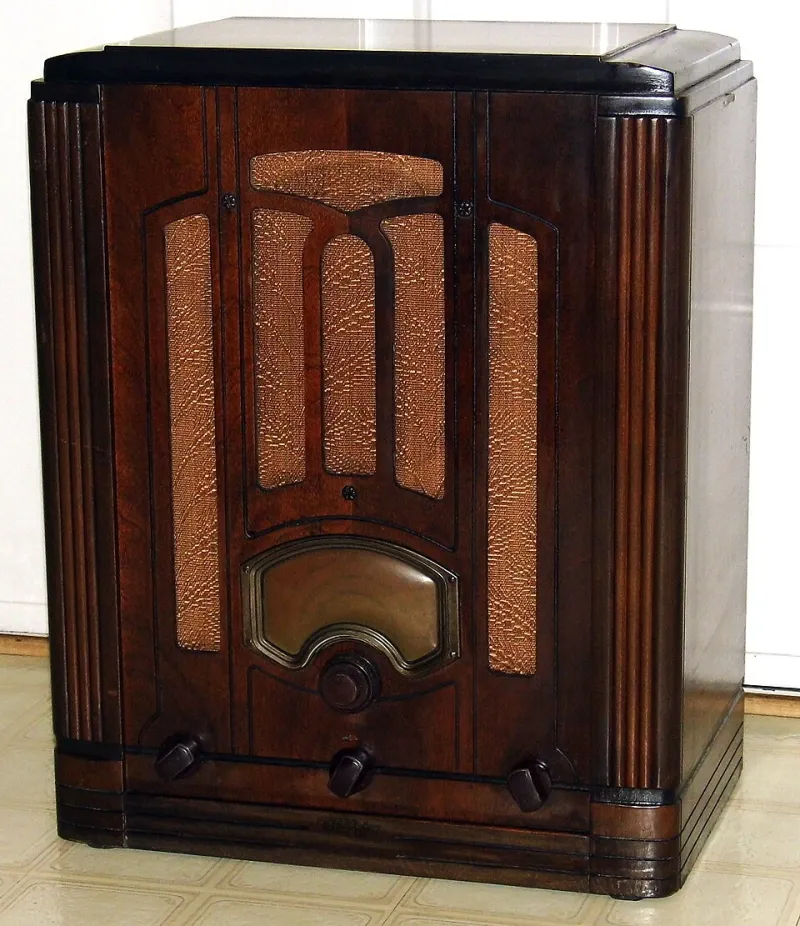
Photo: Joe Haupt from USA, CC BY-SA 2.0, via Wikimedia Commons
Turn a dial far enough past the familiar and you'll hit something that doesn't have a name yet. A warble. A tone sequence. A voice reading numbers in a language you don't speak, then silence. For most people, that's just interference. For a growing slice of American listeners, it's appointment listening.
Shortwave radio — the same technology that carried wartime propaganda across oceans and beamed Cold War spy communications into suburban living rooms — has quietly become one of the more unexpected hobby revivals of the past decade. And it's not just retired engineers or preppers with bunkers. The community pulling in signals from 3 to 30 megahertz today includes college students, artists, insomniacs, and people who describe themselves, without irony, as professional overthinkers.
The Frequency Nobody Talks About
Ask anyone under 35 what they do when they feel disconnected and you'll get variations on the same answer: scroll, stream, maybe text someone who takes three hours to reply. The algorithm knows what you want before you do, and somehow that makes everything feel more hollow.
Shortwave offers the opposite experience. Nothing is curated. Nothing is recommended based on your previous behavior. You spin a dial — physical or virtual, since software-defined radios have opened the hobby to laptop listeners — and you get whatever the ionosphere is bouncing your way tonight. Could be a religious broadcaster out of Tennessee. Could be a numbers station that sounds like it was recorded in 1974 and never stopped playing.
That unpredictability is the point.
"There's no algorithm deciding what I hear," says Marcus, a 29-year-old graphic designer in Portland who started listening during the pandemic and never stopped. "I heard this weird, looping piano melody one night around 2 a.m. and I still don't know what it was. I've been trying to identify it for two years. That mystery keeps me coming back."
Numbers Stations and the Art of Not Knowing
If shortwave has a mythology, numbers stations are its folklore. These are broadcasts — real, documented, still occasionally active — that transmit sequences of spoken numbers, tones, or synthesized voices with no clear public explanation. Intelligence agencies are the most commonly cited source, using one-time pad encryption to communicate with field operatives. Nobody officially confirms this. Nobody officially denies it.
The Conet Project, a compilation of numbers station recordings released in 1997, became a cult artifact. Wilco sampled it. Conspiracy forums dissected it. And a certain kind of listener discovered that sitting alone in the dark, hearing a child's voice count to twenty in German through analog static, produces a feeling that's genuinely hard to describe. Eerie, yes. But also weirdly intimate.
"It sounds like receiving a message meant for someone else," says Diana, a librarian in Ohio who runs a small Discord server for shortwave listeners. "Which, technically, you are. But emotionally it feels like being let in on a secret."
Diana's server has about 400 members. They share logs, exchange frequency tips, and occasionally coordinate simultaneous listening sessions where everyone tunes to the same station at the same time and talks about what they're hearing. It's one of the more unusual forms of communal experience happening online right now.
The Hardware Is Part of the Ritual
There's a tactile dimension to this hobby that streaming will never replicate. Serious shortwave listeners talk about their radios the way musicians talk about instruments — with reverence, with specific complaints, with brand loyalties that border on religious.
The Grundig Satellit. The Sony ICF-SW7600GR. The Tecsun PL-880. These are names that come up in shortwave communities the way sneakerheads discuss colorways. Vintage sets from the '70s and '80s are particularly prized, not just for performance but for the experience of using them — the weight of the tuning knob, the analog frequency display, the physical sensation of hunting across a band.
For younger listeners who came up entirely digital, this is part of the appeal. "Everything I interact with has no resistance," says Jordan, a 24-year-old in Chicago. "Swipe, tap, done. The radio actually pushes back. You have to work to find something good, and when you do, it feels earned."
Signal as Story
What makes shortwave radio resonate at Ayuo's frequency — where signals become stories — is how much interpretation the listener brings to the noise. A burst of data tones becomes a Cold War thriller. A fading broadcast from a foreign religious station at midnight becomes a meditation on distance and belief. A numbers station becomes a character study of an anonymous spy, counting down to something.
None of that meaning is in the signal. It's in the listener. Shortwave radio, at its best, is a collaborative act between electromagnetic physics and human imagination.
The community around it reflects that. Forums like the SWLing Post and Reddit's r/shortwave are less about technical specs than about sharing experiences — the strange thing someone heard last Tuesday, the signal that hasn't been identified in thirty years, the broadcaster that went dark and left nothing behind but a recording and a question.
Why Now?
It's worth asking why this particular hobby is pulling people in during an era when you can access virtually any audio content ever recorded with three taps on your phone.
The answer might be that accessibility has its own kind of loneliness. When everything is available, nothing feels found. Shortwave gives back the experience of discovery — the genuine surprise, the unexplained phenomenon, the thing that might mean something or might mean nothing, and you'll never fully know.
In a media landscape that's increasingly about confirmation and comfort, there's something almost radical about tuning into pure uncertainty.
Marcus, the designer in Portland, puts it simply: "The internet gives me what it thinks I want. The radio gives me what's actually out there." He pauses. "Those are very different things."
Somewhere right now, a signal is traveling through the ionosphere that nobody sent intentionally and nobody is officially receiving. Someone with a good antenna and a dark room is writing it down anyway, trying to make it mean something. That might be the most human thing happening in media today.