Airwave Outlaws: The Young Hackers Smuggling Forbidden Knowledge Through the Radio Spectrum
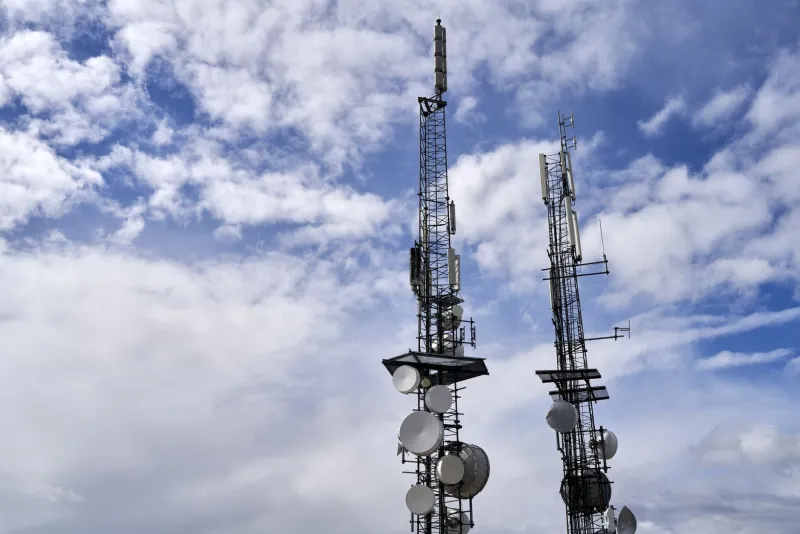
Somewhere in a mid-sized American city — the kind with a decent university, a few too many coffee shops, and a radio tower you've never thought twice about — a 24-year-old is transmitting a banned book into the air around you. You can't hear it. It doesn't sound like anything. But if you know the right software, the right frequency, and the right decoding key, you can pull a full PDF of a challenged novel out of thin air like a magician pulling a rabbit from static.
This is the world of what some are calling "spectrum libraries" — underground networks of young people who have figured out how to hide data inside radio transmissions, operating just outside the reach of the law and, for now, just outside the attention of regulators.
The Airwaves as a Commons
The people doing this don't think of themselves as criminals. Most of them bristle at the word. They talk instead about access — about who gets to decide what information flows freely and who gets locked out.
"The internet used to feel like a commons," says one participant, a college student who asked to be identified only as Mira. "Now it's just landlords all the way down. Paywalls, platform bans, ISP throttling. But radio? Nobody owns the air."
That's not entirely accurate — the FCC very much has opinions about who uses which frequencies and how — but the romantic idea behind it is real enough to fuel a movement. These aren't seasoned hackers with sophisticated rigs. Many of them are working with off-the-shelf software-defined radio equipment that costs less than a decent pair of headphones, open-source encoding tools, and a lot of patience.
The technique itself isn't new. Ham radio operators have been transmitting digital data over radio waves for decades. What's different here is the intent: these transmissions are unlicensed, often on frequencies that skirt FCC regulations, and they're carrying content that someone, somewhere, has decided you shouldn't have easy access to.
What's Actually in There
The catalog, if you can call it that, is eclectic to the point of being beautiful. Participants describe finding encoded copies of books that have been challenged or banned in school districts — Gender Queer, The Kite Runner, Beloved. There are underground zines, out-of-print academic papers locked behind journal paywalls, leaked corporate documents, and experimental art files that exist nowhere else online.
One participant described a transmission he intercepted in rural Ohio that contained an entire lo-fi music album from an artist who had been deplatformed. "It was just floating there," he said. "Like a message in a bottle that someone threw into the sky."
The encoding process varies by group, but a common approach involves embedding data in the audio sidebands of a carrier signal — essentially hiding files in the noise floor of a transmission. To anyone scanning the dial casually, it sounds like interference, maybe a dying weather station. To someone with the right decoder, it's a library.
The Legal Gray Zone
Here's where it gets complicated. Broadcasting without a license on certain frequencies is a violation of the Communications Act, and the FCC has real enforcement teeth — fines, equipment seizure, and in serious cases, criminal referrals. Most pirate radio operations that have gotten busted were running actual audio broadcasts, the kind that interfere with licensed stations or, more critically, aviation communications.
These spectrum libraries are operating differently. They're often low-power, short-duration, and deliberately designed to avoid interference with anything the FCC actually cares about protecting. "We're not stepping on anyone," says a participant who goes by the handle Vex. "We're whispering in a room full of people shouting."
That argument has limits. FCC field agents have begun flagging unusual signal patterns in several metro areas, according to publicly available enforcement logs reviewed for this piece. No one has been charged specifically for data-over-radio smuggling yet, but the infrastructure for it exists.
Legal experts are divided on how this would play out in court. "The content of a transmission has always been somewhat separate from the act of transmitting," says one telecommunications attorney who spoke on background. "But if you're broadcasting without a license, that's the violation. What you're broadcasting is almost beside the point, legally speaking."
A Philosophy Broadcast on a Shoestring
What makes this scene genuinely strange — and genuinely interesting — is how seriously its participants take the ideological dimension. This isn't just about sticking it to the man. There's a whole philosophy here about the nature of public space, about what it means for knowledge to be free, and about the radio spectrum as something closer to a natural resource than a commodity.
Mira talks about it in almost ecological terms. "We've let corporations fence off the internet," she says. "Radio was always supposed to be different. It was supposed to be public infrastructure. We're just using it the way it was meant to be used."
Vex is more pragmatic. "Look, I just think banned books should be findable. I think art that gets deplatformed shouldn't disappear. If I can make that happen with a $30 radio dongle and some Python scripts, I'm going to do that."
There's something undeniably romantic about the image — young people reaching back to an older technology, one that predates the internet by decades, and finding in it a kind of freedom that the modern web no longer offers. It's also, depending on your view, either a principled act of civil disobedience or a nuisance that could one day cause real interference problems.
What Happens Next
The FCC's enforcement division is understaffed and stretched thin, which is part of why this has gone largely unchecked. But the agency has historically moved hard when it does move, and participants in these networks are aware that the window of low-risk operation may not stay open forever.
Some are already migrating to more sophisticated methods — tighter encoding, shorter burst transmissions, rotating frequencies. Others are documenting their techniques openly, posting tutorials under the logic that if the knowledge is widespread enough, it becomes impossible to suppress.
"They can fine one of us," says Vex. "They can't fine the idea."
That might be optimistic. But it's the kind of optimism that tends to generate interesting history, one way or another. The airwaves have always carried more than music and weather reports. They've carried revolutions, propaganda, love letters, and coded messages from people who needed to say something the world wasn't ready to hear.
Now they're carrying libraries. Whether that's heroic or reckless probably depends on which side of the signal you're standing on.