Hidden in Plain Sight: The Sleuths Cracking Secret Messages Buried in Old Website Code
Somewhere in the archived source code of a mid-2000s fan site for a now-defunct TV show, a web designer named "xXDarkStar99Xx" left a comment that reads: "If you're reading this, you're either a developer or you're incredibly bored. Either way, hi. I made this at 2am and I was eating cereal."
That comment sat untouched for nearly twenty years. Nobody read it. The site went dark, the domain lapsed, and the designer presumably moved on with their life. But thanks to the Wayback Machine and a loose network of obsessive internet historians, that little note is now part of a growing archive of recovered web ephemera — the digital equivalent of finding a handwritten message tucked inside a library book.
Welcome to the world of source code archaeology. It's niche, it's nerdy, and it's producing some genuinely weird finds.
What Even Is Source Code Archaeology?
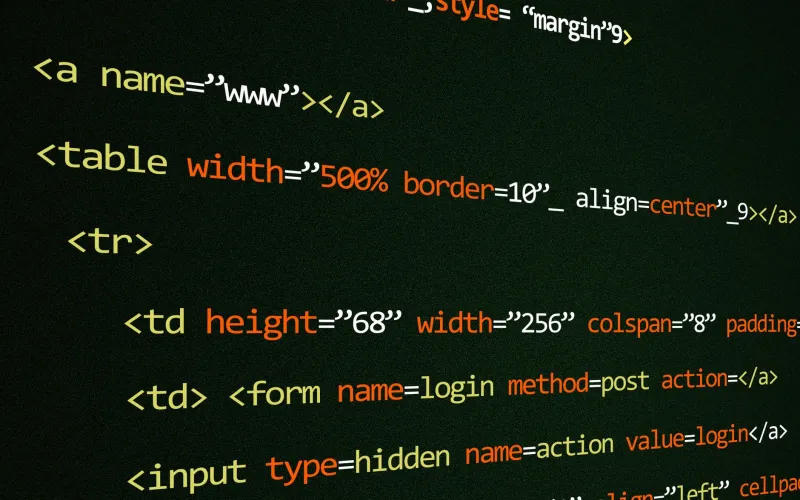
Every webpage you've ever visited has a skeleton underneath it — the HTML, CSS, and occasionally JavaScript that tells your browser how to display what you see. Most people never look at it. But in the early days of the web, designers were acutely aware that someone might look. And some of them decided to leave things there.
We're talking about HTML comments — lines of code that browsers ignore entirely, wrapped in <!-- --> tags — as well as hidden metadata, cryptic CSS class names, and even ASCII art buried several hundred lines deep in a stylesheet. These weren't bugs. They were deliberate. They were personal.
Source code archaeologists — a term the community itself started using semi-ironically on Discord servers and niche subreddits — treat archived websites the way historians treat old letters. Context matters. The timestamp matters. Even the choice of font or the structure of a file directory can tell you something about who made this thing and what headspace they were in.
"It's not just about finding Easter eggs," says one community member who goes by the handle Fernwhistle and moderates a Discord server dedicated to the practice. "It's about recovering a kind of intimacy that the modern web has completely lost. These people were talking to no one. That's what makes it so compelling."
The Archaeology Toolkit
The primary resource for this work is the Internet Archive's Wayback Machine, which has been crawling and saving web pages since 1996. It holds hundreds of billions of archived URLs — a staggering amount of digital sediment waiting to be sifted through.
From there, the process is surprisingly low-tech. You pull up an archived page, right-click, hit "View Page Source," and start reading. That's it. No special software required, just patience and a willingness to scroll through thousands of lines of code looking for something that doesn't quite belong.
Some practitioners go further. There are scripts that can batch-download archived versions of a site and run keyword searches across all of them — looking for patterns like <!-- comment tags, or unusual strings of text that seem out of place. Others focus on specific eras or communities: GeoCities pages from 1998, early gaming forums, personal blogs from the LiveJournal years.
The finds range from mundane to genuinely moving. A CSS file for a small business website from 2003 contained a hidden message from the developer to their client that read, in full: "You never paid me for the last two invoices. I hope this website haunts you." A fan site for a musician who died in 2008 had a comment block near the top of its HTML that said simply: "Still the best. Always." — added, according to the archive timestamps, the week after the musician's death and never updated again.
Why the Early Web Was Different
There's a structural reason this kind of thing happened more in the 90s and 2000s than it does today. Modern web development is largely automated. Frameworks, templates, and content management systems generate most of the code you encounter — a human being rarely sits down and types raw HTML anymore. The code is clean and efficient and completely devoid of personality.
Back then, though, building a website meant writing it yourself, line by line, often in Notepad or Dreamweaver, alone at a desk, probably late at night. The source code was a private space in a way that the actual website wasn't. Visitors saw the rendered page. Nobody saw the code — or so it seemed.
That assumption created a strange kind of freedom. Designers would drop in jokes for hypothetical future developers. They'd hide dedications to people they loved. They'd vent about clients, employers, and dial-up speeds. One archived GeoCities page contains a comment block that is essentially a full diary entry about a bad breakup, sandwiched between two <div> tags.
"There's something almost confessional about it," says Fernwhistle. "Like writing on the back of a painting. You're not expecting anyone to look. That's exactly why people said real things."
The Ethics of Digging
Not everyone in the community is comfortable with all of it. When you're reading a stranger's hidden diary entry from 2001, there's an argument that you're intruding on something that was never meant to be found — even if it's technically public, even if the person who wrote it is untraceable.
The community has developed a loose informal ethics around this. Personal information — real names, addresses, anything that could identify a living person — stays out of public posts. Emotional or clearly private content is shared with care, if at all. The goal, most members say, is preservation and appreciation, not exposure.
"We're not here to embarrass anyone," says another community member. "We're here because these are artifacts. They tell us something about what it felt like to be online before everything got so polished and corporate and optimized. That matters."
Strange Signals, Human Sources
What makes this whole practice so resonant — and so fitting for a site like Ayuo, where strange signals have a way of turning into stories — is the fundamental weirdness of the premise. These messages were transmitted to no one. They were never meant to be received. And yet here they are, decades later, getting read for the first time.
There's something almost haunting about that. A person sat down, typed something honest into a text file, hit save, uploaded it to a server, and then walked away. The server eventually went dark. The Wayback Machine caught a snapshot on the way down. And now a stranger on Discord is reading that person's 2am cereal confession and feeling, inexplicably, a little less alone.
The early web was a lot of things — chaotic, ugly, slow, deeply weird. But it was also surprisingly personal. It turns out the people who built it left notes. We just had to learn how to look.