Spin Cycle, Scene Two
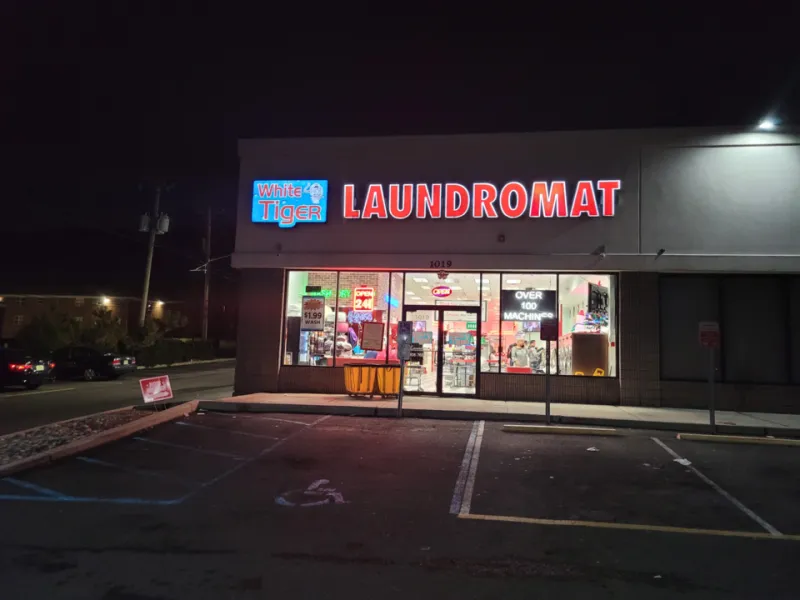
Photo: Curlyrnd, CC BY-SA 4.0, via Wikimedia Commons
On a Tuesday night in September 2026, the Wash-A-Rama on North Lamar in Austin smelled like dryer sheets and rain. A sheet was taped to the wall between two industrial machines. On it, a man in a bowler hat was running from a giant clock. Nobody in the folding chairs seemed to care that the movie was a hundred years old. They cared that their socks were still damp.
The Washer Aisle Is the Auditorium
The screening was organized by Sudsy Screen, a loose collective of DIY programmers who project public-domain silent films and experimental shorts onto laundromat walls in Austin, Portland, Detroit, and Brooklyn. The setup is deliberately cheap: a small projector, a bedsheet, a laptop, and a box of wireless headphones. Customers can watch while their clothes spin. Nobody has to buy a ticket. Nobody has to open an app.
The owner of the Wash-A-Rama, a man named Luis, told me the first screening was supposed to be a one-off. Then people started asking when the next one would be. Now he keeps a stack of extension cords behind the counter and a handwritten sign that says no food on the folding tables. The sign is mostly ignored.
Headphones On, World Off
The headphones are the crucial design choice. Without them, the room would be a chaotic mix of dialogue, music, and the industrial thrum of machines. With them, each viewer gets a private soundtrack inside a shared space. You can hear the film. You can also hear the person next to you sigh when the protagonist makes a bad decision. The effect is oddly intimate, like sitting in a living room that happens to have twelve dryers.
At the Austin screening, the film was a 1920s comedy short about a department store clerk who accidentally becomes a hero. The plot was thin. The audience loved it. A woman in a hoodie laughed so hard she dropped a dryer sheet. A teenager who had come in with a basket of towels watched the entire thing standing up, headphones clamped over his ears, as if he had wandered into a secret.
A Third Place With Static
There is a lot of talk right now about third places — the spaces between home and work where people can exist without spending money. Laundromats are not usually part of that conversation. They are transitional. You go in, you wait, you leave. But transitional spaces are exactly where people are most open to interruption.
The Sudsy Screen organizers are not trying to turn laundromats into bars or clubs. They are trying to add a little signal to a room that already has a rhythm. The spin cycle becomes an interval. The dryer buzzer becomes a curtain call. The screening gives strangers a reason to stay five minutes longer than they planned.
That matters more than it sounds. A lot of cultural programming in 2026 is designed to capture attention and then measure it. These screenings are designed to pass the time. There is no ticket scan, no drink minimum, no algorithm recommending the next event. The only metric is whether the clothes are dry.
The Dryer as Interval
The collective has started publishing a free zine with screening schedules and short essays about public-domain films. The zines are left in the laundromats, next to the coin machines. People take them. Some of them come back. One organizer told me she found a zine in a dryer once, slightly warm, with a handwritten note on the back: more Buster Keaton next time.
That is the whole business model, if you can call it that. A projector, a sheet, a box of headphones, and a willingness to let a room be weird for an hour. The screenings are not trying to revive the silent era or save physical media. They are trying to make waiting feel less like a waste.
After the Austin show, I stood outside with a man who had watched the entire short while folding a fitted sheet. He said he usually hates doing laundry. He said the screening made the chore feel like part of the evening. Then he walked home with a basket under his arm, still humming something from a piano score that had been recorded in 1924.
The dryer buzzed behind us. The next load was ready. The movie was over, but the room was still a room.