Altars to the Obsolete: The Gen Z Collectors Who Worship Machines They've Never Switched On
There's a Betamax player on Marcus Webb's dresser in Columbus, Ohio. It hasn't worked since sometime in the mid-nineties, decades before Marcus was born. He knows this. He's not trying to fix it. He dusts it every Sunday morning with a microfiber cloth, the same one he uses for nothing else, and he repositions it slightly — a quarter inch to the left, maybe — the way you'd straighten a framed photograph of someone you loved.
"It's not about playing tapes," Marcus says. "It's about what it meant to be a machine that tried."
He's twenty-two. He found the Betamax at an estate sale in 2021 and paid fourteen dollars for it. He has since added a LaserDisc player, two broken camcorders from the early 1980s, and a first-generation Sony Mavica digital camera — the one that saved images onto actual floppy disks — to what he calls, without irony, his collection. His roommate calls it something else. His roommate is wrong, Marcus says.
The Shrine Aesthetic
What Marcus is doing has a name now, at least informally. In corners of TikTok and across subreddits dedicated to obsolete media, a loosely connected community of young Americans — mostly Gen Z, mostly between eighteen and twenty-six — has developed a practice that sits somewhere between hoarding, curating, and something that looks unmistakably like reverence.
They call themselves different things. Tech archivists. Dead media collectors. Obsolescence enthusiasts. But spend enough time in their spaces — virtual or physical — and the religious vocabulary starts surfacing on its own. Shrines. Relics. Rituals. One collector in Portland describes her shelf of non-functional early digital cameras as "my congregation." She's not being ironic about that either.
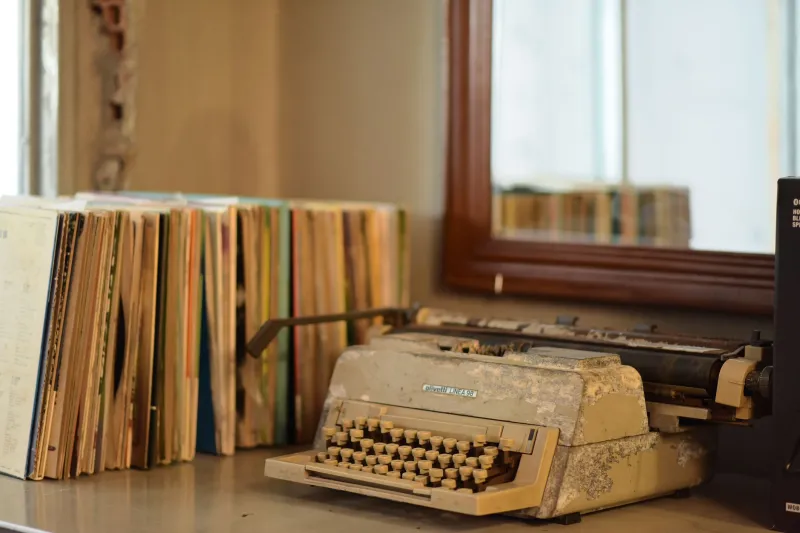
The objects themselves share a specific profile. They're not just old — they're defeated. These are technologies that lost. Betamax to VHS. LaserDisc to DVD. Early digital cameras to smartphones. The 8-track to the cassette. Each one represents a moment where the market made a decision and something got left behind, not because it was bad, but because the world moved on faster than it could follow.
For this generation, that specific kind of loss apparently hits different.
Permanence as Protest
Dr. Lena Cho, who researches material culture and digital identity at a university in the Pacific Northwest, has been watching this trend develop for about three years. She sees it as a response to something specific about the digital environment Gen Z inherited.
"Everything in their media lives is designed to disappear," she says. "Streaming libraries change. Apps shut down. Platforms delete old content. The cloud is convenient but it's also completely abstract — you can't hold it, you can't see it deteriorate, you can't know when it's gone until it's already gone."
The broken Betamax deck, by contrast, is not going anywhere. It cannot be updated, deprecated, or quietly removed from a catalog. Its brokenness is, paradoxically, its most stable quality. It will be exactly as broken tomorrow as it is today.
"There's a kind of honesty in that," Cho says. "These machines failed in ways you can see and touch. That's more than most technology offers them now."
Several collectors echo this framing without prompting. Jasmine Okafor, twenty, keeps a shelf of dead electronics in her apartment in Atlanta that she describes as "the only things in my life I know won't change." Her most prized piece is a first-generation iPod with a shattered screen and a dead battery. She's never replaced the battery. She's not going to.
"It's complete," she says. "It already did everything it was going to do. I find that kind of peaceful."
The Ritual of Maintenance
What distinguishes this practice from ordinary collecting — or from the more familiar Gen Z nostalgia for Y2K aesthetics — is the maintenance ritual. These are not functional devices being preserved. They are broken objects being tended.
Marcus cleans his machines weekly. Others in the community describe similar routines: careful dusting, occasional disassembly and reassembly of internal components that serve no purpose, the slow application of specialized cleaning solutions to mechanisms that will never again spin or read or record anything. One collector in Austin has a full set of jeweler's tools he uses to open and close the same LaserDisc player on a monthly basis, inspecting the laser assembly with the focused attention of someone checking a wound.
"I'm not trying to fix it," he says. "I just want to understand it. Every time I open it up I see something I didn't notice before."
This is where the spiritual analogy starts feeling less like a metaphor. The maintenance is not practical. It produces nothing. It changes nothing about the object's functionality. It is, by any rational measure, a complete waste of time — and the collectors know this, and they do it anyway, and they find it meaningful.
That's a pretty clean definition of ritual.
What the Signal Carries
Ayuo has always been interested in what happens when signals travel further than they were supposed to — when a transmission keeps going after the source goes dark. These dead machines are, in a way, still broadcasting. Not audio, not video, not data. Something else.
There's a theory circulating in this community, never quite stated directly but always present, that the machines that lost carry a particular kind of information. Not the content they stored or played, but the fact of their failure itself. The Betamax didn't just lose a format war. It represents every product, every idea, every attempt that was good enough but not quite right for the moment it lived in.
For a generation that came of age watching platforms implode and algorithms decide what gets seen and what disappears, there's something resonant about honoring the things that got left behind not because they were worthless but because the current was running the other way.
"I think about all the people who bought these," says Jasmine, gesturing at her shelf. "They thought this was the future. They were right about everything except the timing."
The Collection Grows
The community is small but it's not shrinking. Estate sales, thrift stores, and eBay have become primary hunting grounds. Prices for certain dead-format machines have quietly climbed over the past two years as more collectors enter the space. A working LaserDisc player — functional, not just decorative — now regularly sells for over three hundred dollars. Non-functional ones, the kind that are genuinely broken, often sell for less, but they sell.
Some collectors are starting to document their objects more formally: photographing internal components, researching manufacturing histories, tracking down the engineers who designed systems that never made it. One twenty-three-year-old in Chicago has been corresponding with a retired Sony engineer about the Betamax's actual technical superiority over VHS — a conversation he describes as one of the most meaningful he's had.
"He was surprised anyone still cared," the collector says. "I told him we care a lot. We care specifically because everyone else stopped."
That might be the cleanest summary of what this practice is actually about. In an environment built on constant refresh and forward momentum, these young Americans have decided that something important lives in the wreckage. They're not trying to restart the signal. They're just making sure someone's still listening.