Paper Proof: The Young Americans Building Empires Out of Old Receipts
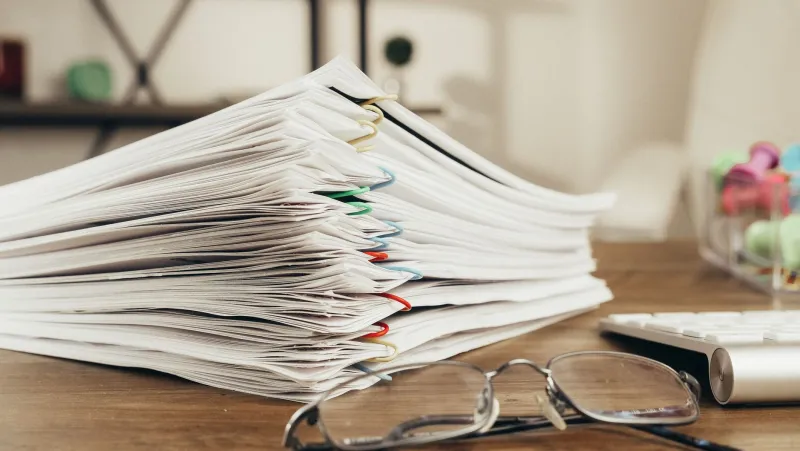
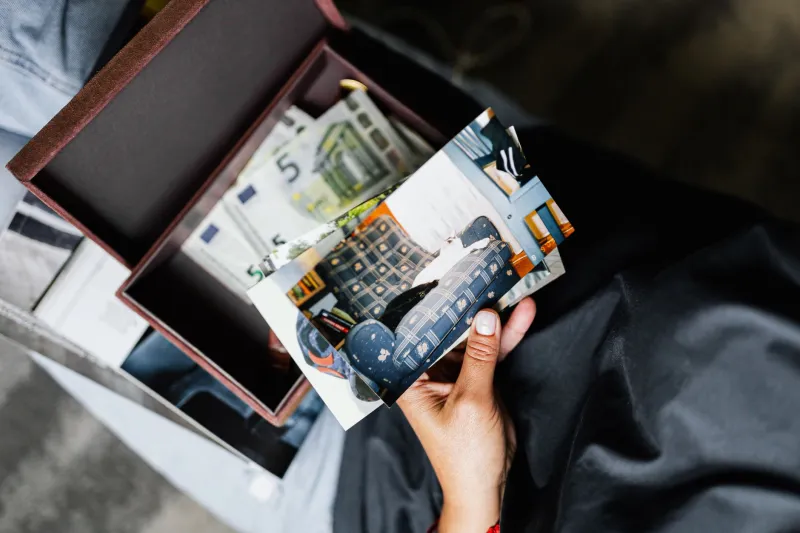
There's a shoebox under Maya Okonkwo's bed in Columbus, Ohio, and it is absolutely stuffed. Not with letters or photographs or the kind of sentimental clutter you'd expect from a 24-year-old. It's receipts. Hundreds of them. Gas station stops, coffee shops, grocery runs, the occasional splurge at a vintage clothing store on High Street. Organized by month, rubber-banded into bundles, annotated in the margins with a fine-point pen.
"My bank app shows me a version of my spending," she says. "But it's their version. This is mine."
Maya isn't alone. Across the US, a loose but growing community of young people is quietly pushing back against the total digitization of personal finance — not by unplugging from the system entirely, but by insisting on holding a physical copy of it. They're calling themselves analog accountants, receipt archivists, paper trail keepers. Whatever the label, the impulse is the same: if a record doesn't exist in your hands, can you really trust it exists at all?
The Problem With Paperless
We were told going paperless was good for everyone. Less clutter, better for the environment, easier to search. And in a lot of ways, it delivered. But somewhere in that transition, something slipped. The terms of service got longer. The data got sold. The app changed its interface and suddenly three years of categorized spending history looked completely different, or worse — disappeared.
For a generation that grew up watching platforms pivot, fold, or quietly rewrite the rules, the promise of "we'll keep this safe for you" lands differently. Instagram has buried posts. Venmo made transactions public by default until enough people noticed. Banks have quietly reclassified purchases in ways that affect credit profiles. The digital trail exists, sure — but it's curated by someone else, stored on someone else's server, and subject to someone else's terms.
Thermal paper, for all its fading and fragility, doesn't update its privacy policy.
What a Receipt Actually Records
Here's the thing that the receipt archivists will tell you if you get them talking: a physical receipt records something that digital transactions don't. Not just the amount, but the texture of a moment.
The timestamp on a gas station receipt from rural Nebraska at 2:47 a.m. tells a story. So does the handwritten "thank you" from a cashier at a small-town diner, or the smudged ink on a receipt from a store that closed six months later. These are primary documents in the truest sense — unmediated, unfiltered, exactly as they were at the moment of exchange.
Daniel Reyes, a 27-year-old in Austin who started his receipt archive during the pandemic, has gone a step further. He cross-references his physical records against his bank statements every month, flagging discrepancies and noting price changes over time. "I've tracked inflation in real time through my own grocery receipts," he says. "The numbers I'm seeing don't always match what I'm being told about the economy."
He's not wrong to look. Economists and journalists have long used consumer price data to tell macroeconomic stories. Reyes is just doing it from the bottom up, one crumpled paper at a time.
The Archive as Autobiography
There's a creative dimension to this practice that goes beyond financial literacy. Some receipt collectors are treating their archives the way a diarist treats a journal — as a running record of a life in progress.
In Portland, a 22-year-old named Soren has turned her receipt collection into an art project. She photographs each receipt before filing it, then posts the images to a private blog with short annotations. A receipt from a bookstore becomes a meditation on what she was looking for that week. A pharmacy receipt becomes a quiet record of a hard month. "It's autobiography through commerce," she says. "Which sounds bleak, but it's actually kind of beautiful when you look at it over time."
This is where the practice bumps up against something older and stranger — the idea that what we buy is a signal, a transmission about who we are and what we needed at a particular moment. Every purchase is a small broadcast. The receipt is the log.
Rebellion With a Paper Cut
Not everyone sees this as purely philosophical. For some, it's explicitly political.
The rise of financial surveillance — algorithmic credit scoring, purchase-based advertising targeting, the quiet data-sharing agreements between banks and third-party analytics firms — has made a lot of young Americans deeply uncomfortable. They've read the stories. They know their spending habits are being packaged and sold. They know that "free" financial tools are rarely actually free.
Keeping physical records is, for some of them, a way of maintaining a version of their financial life that exists outside that ecosystem. It can't be scraped. It can't be sold. It can't be used to serve them an ad for something they almost bought three weeks ago.
"There's no algorithm that can read my shoebox," Maya says, and she says it like a point of pride.
The Unexpected Historians
Archivists and historians are starting to pay attention. Personal financial records have always been valuable primary sources, but they've historically been hard to access — locked in estate files, buried in attics, lost to time. The shift to digital has made recent financial history even harder to preserve, because digital records are proprietary, platform-dependent, and rarely donated to archives.
These Gen Z collectors are, almost accidentally, filling a gap. Their shoeboxes and binders are becoming micro-archives of contemporary American consumer culture. What did groceries cost in Cincinnati in 2022? What gas stations were still open at midnight in rural Georgia? What did a cup of coffee cost at a now-closed independent café in Brooklyn? The receipts know.
It's not glamorous preservation work. There's no institution funding it, no grant, no formal methodology. But the signal is there, tucked between layers of thermal paper, waiting for someone to read it.
Keeping the Signal Honest
Maybe what connects all of these people — the meticulous accountants, the accidental autobiographers, the surveillance skeptics — is a shared instinct about trust. Not distrust of technology exactly, but a recognition that the version of your life that lives in someone else's database is always going to be a translation. And translations lose things.
The original is the paper in your hand. The ink that's already starting to fade. The date, the store, the total, the moment.
Maya pulls a receipt out of her shoebox — a coffee shop in her old neighborhood, two years ago, $4.75. The place closed last spring. "This is the only proof I was ever there," she says.
Some signals are worth keeping analog.