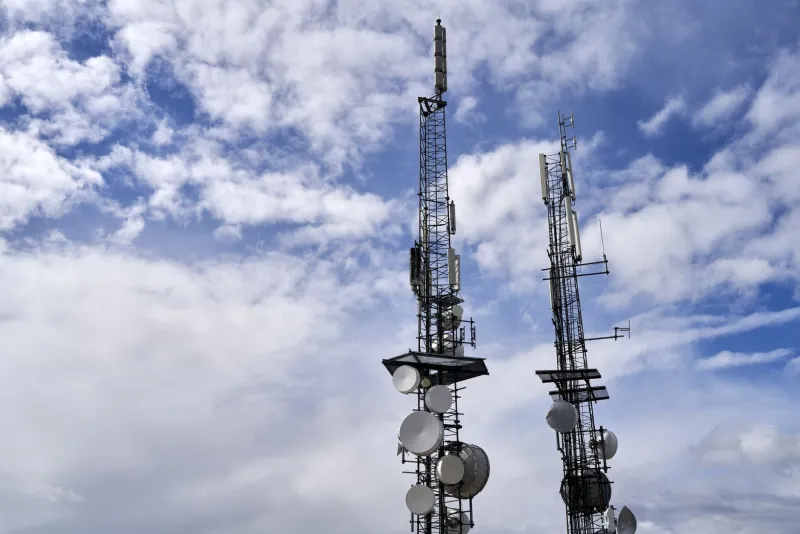
No Signal, No Problem: Meet the Young Americans Who Ripped Out Their Routers on Purpose
The first thing you notice when you walk into Dani Reyes's apartment in Portland is the quiet. Not the performative quiet of someone who just turned off a podcast when the doorbell rang, but a deeper kind — the kind that has texture. On the kitchen counter, a rotary phone the color of old cream sits next to a ceramic fruit bowl. In the living room, a turntable is mid-spin, the needle tracing the grooves of a battered Fleetwood Mac record. There is no smart TV. There is no router. There is no WiFi.
"People come over and they get this look," Dani says, gesturing vaguely at the walls. "Like they're waiting for the catch. Like I'm going to pull back a curtain and show them the real setup."
There is no curtain. This is the real setup.
The Architecture of Disconnection
Dani is part of a loose but growing movement of young Americans — mostly in their twenties and early thirties — who are redesigning their living spaces around intentional technological absence. These aren't off-grid survivalists or tech-averse retirees. They're people who grew up with iPhones, who know how algorithms work, who've spent years inside the machine. And they've decided, with varying degrees of ceremony, to leave.
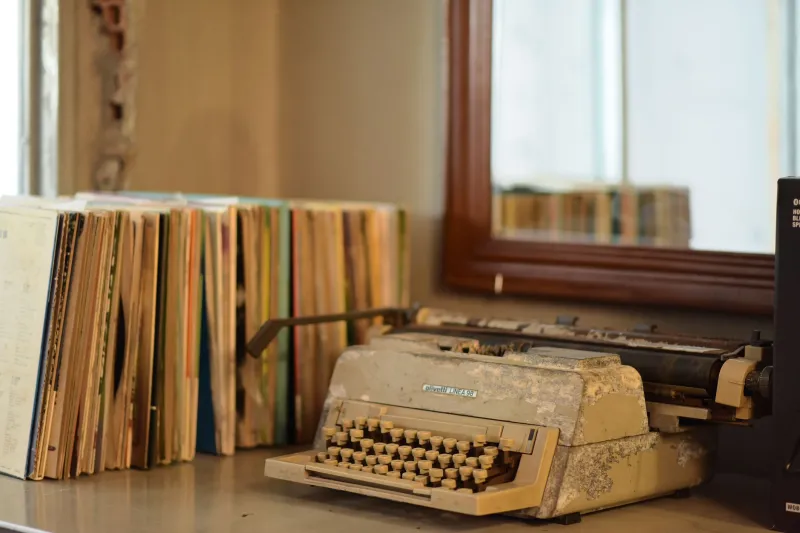
The specifics differ apartment to apartment. Some go full analog: rotary or push-button landlines, mechanical typewriters for correspondence, vinyl-only audio. Others draw more selective lines — no WiFi, but a mobile data plan kept strictly for outside the home. A few maintain what they call "portals," a single device tucked in a drawer for emergencies, rarely opened.
What ties them together is the deliberateness. This isn't accidental disconnection. It's designed.
Marco, a 28-year-old graphic designer in Chicago, spent three weekends last year reconfiguring his Wicker Park studio. He returned his router to his ISP, sourced a 1960s Western Electric desk phone from an estate sale in Evanston, and built a small shelf specifically to hold a cassette player and a rotating collection of mixtapes. His internet use now happens exclusively at coffee shops or the library.
"I started thinking about my apartment as a signal," he says. "Like, what frequency does this space broadcast? And I didn't like what I was transmitting."
Inconvenience as a Practice
The friction is, in a strange way, the point.
Look up a phone number on a rotary phone and you'll find yourself dialing slowly, deliberately, each click of the wheel a small commitment. Type a letter on a mechanical typewriter and you'll think twice before every sentence — corrections are possible but annoying, and the physical weight of each keystroke makes you choose words more carefully. Put on a vinyl record and you can't shuffle. You can't skip. You sit with the album as the artist sequenced it.
"It forces you to be present in a way that apps specifically engineer against," says Dr. Lenora Fitch, a media studies lecturer at a university in the Pacific Northwest who has been informally documenting this trend for the past two years. "These spaces are essentially designed to create resistance. And resistance, in this context, is a feature."
For many in this community, the analog apartment isn't about rejecting technology wholesale. It's about reclaiming the home as a space where attention isn't automatically for sale. The phone that rings is a landline — and if you're not there to answer it, it just rings.
What Gets Louder When the Signal Dies
Ask people what surprised them most about going WiFi-free at home, and the answers cluster around the same theme: other people.
Dani started hosting weekly dinners after disconnecting. "When there's no phone to look at, you actually talk," she says. "Like, weird, long conversations about nothing. That sounds small, but it genuinely changed my friendships."
Marco noticed something similar. His neighbors, who he'd barely spoken to in two years of living in the same building, started stopping by more. Partly because he'd given them his landline number. Partly because the landline meant he was actually reachable in a specific, bounded way.
"There's this thing that happens when your home doesn't have WiFi," he says. "It becomes a place again. Not just a location where you also do the internet."
That distinction — home as place versus home as node — shows up again and again in conversations with people who've made this choice. The analog apartment isn't a rejection of the outside world. It's a deliberate boundary around the inside one.
Community in the Static
Online communities — yes, the irony is noted — have formed around analog living, with forums and subreddits where people trade tips on sourcing vintage phones, debate the merits of different typewriter models, and share photos of their setups. There's a particular warmth to these spaces, a kind of mutual recognition between people who've made a choice that the broader culture mostly treats as eccentric.
Some cities have seen informal meetups emerge: analog apartment tours, swap meets for vintage audio equipment, "pen pal" networks where participants actually mail letters. In Brooklyn and Austin and Denver, small collectives have started hosting "disconnection nights" where the house rules include no smartphones past the front door.
"It's become a way of finding people," says Yael, a 31-year-old in Seattle who converted her apartment two years ago and now organizes a monthly gathering for others in her neighborhood who've done the same. "You'd think going offline would make you more isolated. It kind of did the opposite."
The Signal Underneath
There's something almost poetic about the way these apartments function — as spaces that resist the dominant frequency of modern life by broadcasting something older, slower, and harder to monetize. A rotary phone doesn't collect data. A typewriter doesn't push notifications. A record player doesn't know your listening history.
What these spaces transmit, if they transmit anything, is something like intention. The choice to make a call, write a letter, or listen to a whole album side without interruption is a choice made consciously, against friction, against the path of least resistance.
Whether that adds up to resistance in any meaningful political sense is a fair question. Critics point out that analog living is expensive — vintage equipment costs money, and opting out of certain digital infrastructures is a luxury not everyone has. The people doing this are, by and large, not struggling to pay rent.
Dani acknowledges the critique. "I'm not pretending this is a revolution," she says. "It's just my apartment. It's just how I want to live."
She reaches over and lifts the needle on the turntable, flipping the record to side B. Somewhere across town, her landline is ringing. She doesn't know who it is. She'll find out when she gets home.
That's kind of the whole point.