Grooves and Ghosts: The Young Americans Bringing Unplayable Records Back to Life
There's a particular kind of sadness to a warped record. It sits there in a thrift store bin, bent like a potato chip, sleeve long gone, label faded to near illegibility. Most shoppers flip past it in half a second. But for a growing number of young Americans, that sad, sun-damaged disc is basically an invitation.
They call themselves restorers, though some prefer the less formal title of just "people who can't leave broken things alone." Whatever the label, their work is painstaking, oddly meditative, and increasingly countercultural in an era when replacing something costs less than fixing it.
Finding the Unfixable
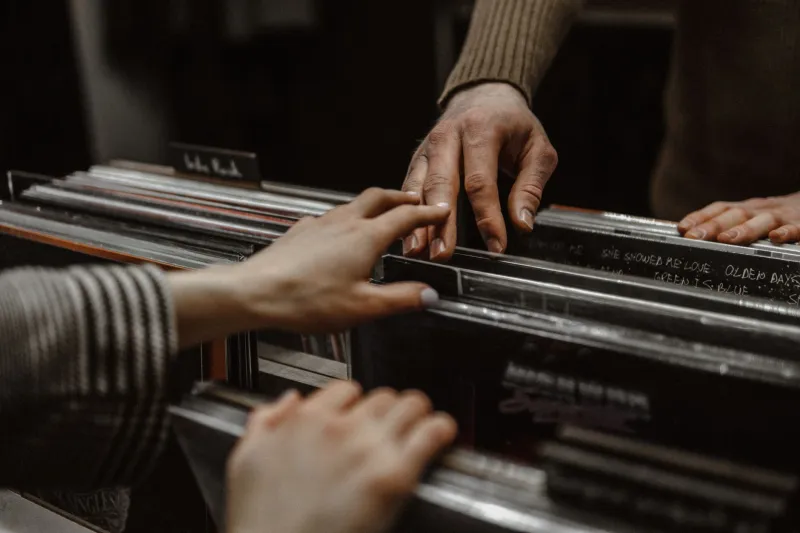
The hunt usually starts at estate sales, Goodwill bins, or those cardboard boxes outside record shops labeled FREE — TAKE THEM, PLEASE. These are the records that even dedicated collectors have written off. Deep groove damage. Heat warps so severe the needle skips three tracks at once. Mold blooms across the surface like a tiny apocalypse.
For 24-year-old Marcus, based in Portland, Oregon, the appeal is almost perverse. "The worse the condition, the more interesting it is," he says. "A mint copy of something just needs to be played. A destroyed copy needs to be understood."
He's spent the last three years developing a process that involves everything from custom-built vinyl flattening rigs — essentially two sheets of glass and a very precise oven temperature — to ultrasonic cleaning machines he assembled from parts sourced on eBay. His workspace looks less like a music hobby corner and more like a very calm laboratory.
The Technique Is the Point
Restoring vinyl isn't a single skill. It's a constellation of them, and the learning curve is steep enough that most people bail early. There's the chemistry of cleaning solutions, the physics of groove geometry, the acoustics of distinguishing a fixable scratch from a fatal one. Restorers develop a kind of tactile literacy — running a fingertip across a record's surface and reading it the way a doctor reads an X-ray.
Some damage is mechanical: warps from heat or pressure that can sometimes be coaxed back to flat with the right combination of weight, warmth, and time. Other damage is chemical — pressing defects, contaminants baked into the vinyl itself during manufacturing. And then there's the stuff that's just genuinely gone: a scratch deep enough to have physically removed the groove wall means that sonic information no longer exists anywhere on earth, unless someone recorded it before the damage happened.
That irreversibility matters to people in this community. "You're working with something finite," says Dani, 22, who started restoring records during the pandemic in her Chicago apartment. "There's no undo button. No autosave. You either bring it back or you accept that it's lost."
Strangers' Music, Personal Weight
A lot of the records these restorers work on carry a particular emotional charge — they belonged to someone. Estate sale vinyl is especially loaded. You're holding a collection assembled over decades, representing someone's taste, their memories, the songs that soundtracked their actual life. The person is gone. The records survived.
That weight doesn't go unnoticed. Marcus describes spending an afternoon restoring a copy of Carole King's Tapestry he found at an estate sale in a suburb outside Portland. The record was heavily played, slightly warped, and had someone's name written in marker on the label — a habit people used to have when they lent records to friends and wanted them back. "I kept thinking about who wrote that name," he says. "Whether they ever got it back."
This is where vinyl restoration starts to feel less like a hobby and more like a form of archaeology with emotional stakes. The signal that was pressed into that plastic in 1971 is still there, waiting. The restorer's job is just to clear the path.
Resistance Through Repair
It would be easy to frame this purely as nostalgia — Gen Z reaching backward for analog warmth in a streaming-saturated world. But spend any time talking to people in this community and a different thread emerges: genuine frustration with disposability.
"We grew up being told that things have a lifespan and when that lifespan is up, you buy a new one," Dani says. "Nobody teaches repair. Repair isn't profitable. But repair is actually the more interesting thing to learn."
There's something almost political in choosing to spend twenty hours bringing one record back from the edge instead of streaming the same album on Spotify in thirty seconds. It's not efficient. It doesn't scale. It produces exactly one result — a single physical object that plays better than it did before — and that result belongs to whoever did the work.
The vinyl restoration community online is small but dense, gathered in forums, Discord servers, and YouTube channels where people post long, quiet videos of their cleaning rigs and flattening setups. The comment sections read like dispatches from people who've found a practice that actually satisfies them in a way that passive consumption doesn't.
What the Signal Sounds Like After
The payoff, when it comes, is specific and strange. A record that skipped and popped and warped its way through every play suddenly tracks cleanly. Music that was buried under surface noise becomes audible again. Sometimes the restoration is imperfect — a few remaining ticks, a slight trace of the old warp — and those imperfections become part of the record's character rather than obstacles to it.
"The first time I played a record I'd spent a week on and it just... worked," Marcus says, trailing off for a moment. "It's hard to explain. It's not like anything else."
That might be the most honest description of what this practice offers: an experience that doesn't translate easily into a post or a playlist or a metric. You either know what a restored groove sounds like, or you don't. The signal either comes through, or it doesn't.
For a generation that's grown up with essentially infinite access to recorded music, choosing to spend real time and effort recovering one specific record from one specific bin feels like a meaningful act. Not a loud one. Just a quiet insistence that some things are worth saving, even when nobody's watching, even when it takes longer than it should, even when the record belonged to someone whose name you'll never know.