Transmitting to No One: The Phantom Radio Operators Still on the Air
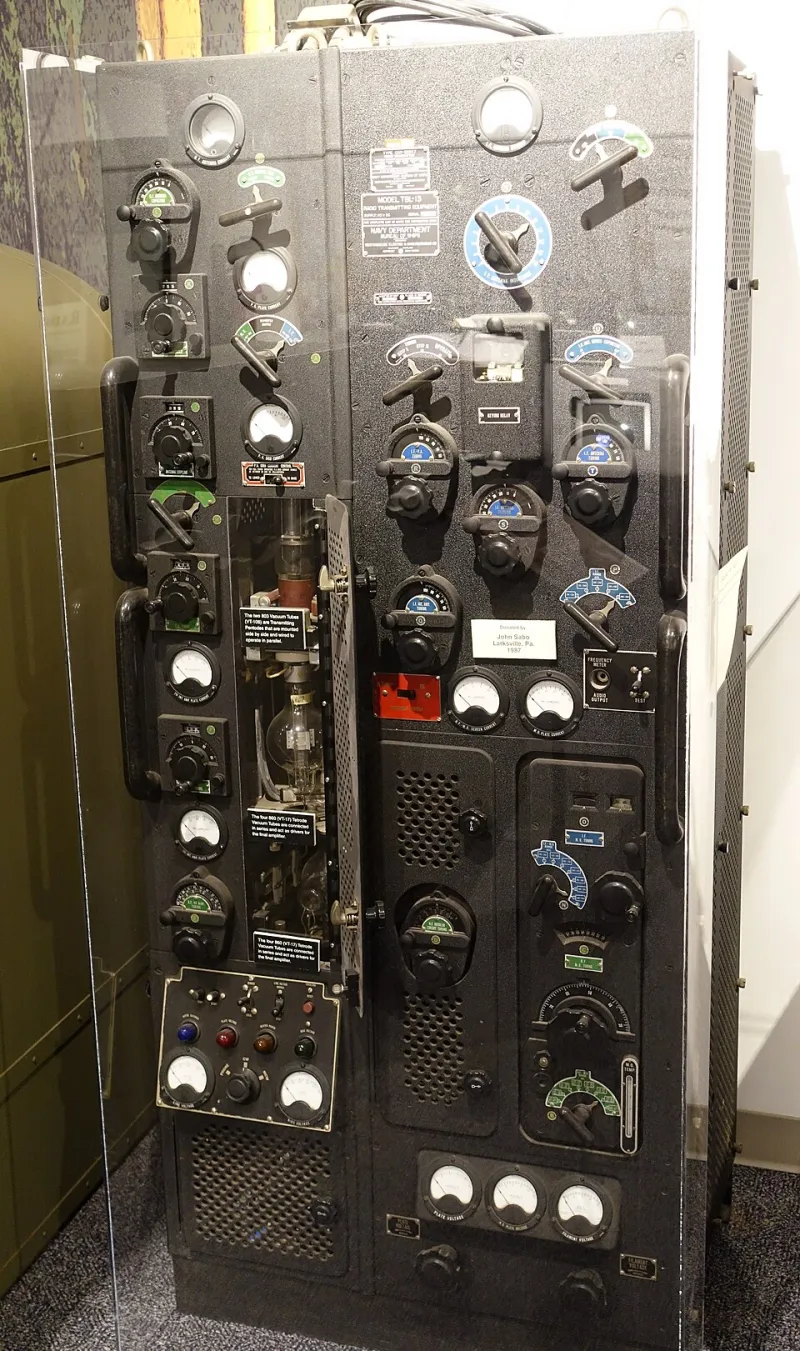
Photo: Daderot, CC0, via Wikimedia Commons
Somewhere in the American Midwest, a man who goes by the handle Corridor FM has been broadcasting a four-hour show every Friday night for eleven years. He plays obscure jazz, reads weather poetry he writes himself, and occasionally just holds the microphone up to the window so listeners can hear the rain. His estimated audience on any given night: between zero and eight people. He has never once considered stopping.
"The transmission is the point," he said, in a message shared through an online forum dedicated to low-power FM enthusiasts. "Whether or not anyone's receiving it doesn't change the fact that it's going out."
This is the strange, stubborn world of America's phantom broadcasters — the pirate radio operators, experimental signal senders, and underground DJs who are still out there on the dial, talking into the dark.
A Brief History of Broadcasting to the Void
Pirate radio in the United States has a long and genuinely fascinating history that most people don't know about. Long before the internet made it trivially easy to reach a global audience, unlicensed broadcasters were rigging transmitters in apartments, barns, and car trunks to push signals out over whatever slice of the FM band they could grab. The 1970s and 80s saw a wave of politically motivated pirate stations in cities like New York and Chicago — community voices that couldn't afford or couldn't access the FCC licensing process. Some of them were radical. Some of them were just people who wanted to play the music they loved for their neighborhood.
The FCC has cracked down periodically over the decades, and the legal landscape for low-power broadcasting has shifted — the Low Power FM (LPFM) licensing program, expanded in 2012, gave some community broadcasters a legitimate path. But plenty of operators never applied, never wanted to, or simply don't fit the model that licensing requires. They're still out there, broadcasting on frequencies the algorithm can't find, reaching audiences that can't be tracked or monetized.
And some of them are broadcasting to, as near as anyone can tell, basically nobody.
The Psychology of the Empty Airwave
This is the part that gets genuinely interesting: why do it?
We live in a cultural moment that is absolutely obsessed with audience metrics. Every platform tells you how many people watched, liked, shared, or saved your content. The entire architecture of modern creative life is built around feedback — the dopamine loop of engagement, the validation of being seen. To broadcast without knowing if anyone is listening isn't just countercultural. It's almost psychologically alien.
And yet the people who do it tend to describe the experience in terms that sound less like deprivation and more like relief.
"I stopped caring about the audience about six months in," wrote one operator who runs an experimental music station out of rural Vermont and asked not to be identified by location. "And when I stopped caring, the show got so much better. I stopped performing. I just started being."
There's a concept in psychology called intrinsic motivation — doing something because the activity itself is rewarding, rather than for external validation. Research consistently shows that intrinsic motivation produces deeper engagement, more creative output, and greater long-term satisfaction than extrinsic motivation. The phantom broadcasters, accidentally or deliberately, have stripped away every extrinsic reward that modern media offers. No follower counts. No ad revenue. No viral moments. What's left is just the act of transmission itself.
For some of them, that's apparently more than enough.
What Gets Said When No One's Listening
The content coming out of these phantom stations is, predictably, all over the map.
Some operators run what amounts to personal audio journals — monologues about their days, their thoughts, the things they're reading or watching or worrying about. The format is closer to a diary than a broadcast, except it's going out over the air instead of into a notebook. There's something almost tender about it: a voice in the dark, talking to whoever might be driving past.
Others get deeply experimental. One station documented in an online thread dedicated to pirate radio hobbyists apparently broadcasts nothing but field recordings — the operator spends their week recording ambient sound (diners, laundromats, highway overpasses, late-night gas stations) and then plays them back unedited on Friday nights. No commentary. No music. Just America, captured and re-transmitted.
And then there are the music stations — the underground DJs who are playing records that Spotify's algorithm would never surface in a million years. Deep cuts from forgotten regional soul labels. Outsider country from the 1960s. Noise music that sounds like a building thinking. The kind of music that exists in the margins and stays there, which is, for the people playing it, precisely the point.
The Signal as a Statement
There's an argument to be made — and some of the more philosophically inclined operators make it explicitly — that broadcasting to an empty frequency is itself a kind of statement about the current media landscape.
Every major platform right now is engaged in a massive, ongoing project of capturing attention and converting it into data. Your listening habits, your viewing patterns, your pauses and skips and replays — all of it feeds systems that learn to predict and shape what you want next. The goal isn't to give you what you're looking for. The goal is to make you keep looking.
A signal that doesn't track you, can't monetize you, and doesn't know or care if you're there is a genuinely radical object in that context. It's not trying to hold your attention. It's just there, like a lighthouse, whether or not any ships are coming.
"I think about it like leaving a light on," Corridor FM wrote. "Maybe nobody needs it tonight. Maybe somebody does. I don't need to know which."
Tuning In
If you want to find these stations, you can — it just takes some effort, which feels appropriate. Online communities dedicated to pirate radio and experimental broadcasting share frequencies, schedules, and signal maps. Low-power signals are often hyper-local, which means you might need to actually be in the right place at the right time, which is also, in a world of on-demand everything, a kind of novelty.
Or you could just scan the dial late at night, somewhere between cities, somewhere the commercial stations start to thin out. You might find static. You might find a trucking dispatch channel. You might find someone reading weather poetry into a microphone in the dark.
If you do, stay with it for a minute. You're not just a listener — you're the audience that showed up. For one night, the transmission meant something, and so did you.