Tape Hunters: The People Saving Strangers' Memories From Oblivion
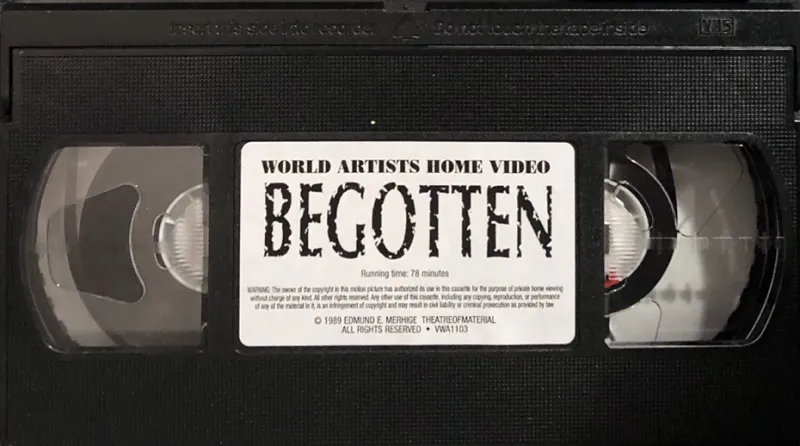
Photo: Label printed by World Artists Home Video, the distributor of the VHS., Public domain, via Wikimedia Commons
The tape has no label. Just a strip of masking tape with "Summer 92" written in fading ballpoint. Someone paid a quarter for it at a Goodwill outside Columbus, Ohio, brought it home, threaded it through a VCR they sourced off Craigslist, and hit play. What came out wasn't a movie. It was a backyard barbecue. Kids running through a sprinkler. A dad who kept forgetting to hold the camera steady. A grandmother laughing at something just off-frame.
Nobody in that footage knows it's being watched. Nobody knows it still exists.
This is the quiet, strange world of VHS archivists — people who pull deteriorating tapes from estate sales, dumpster hauls, and thrift store bins, then spend hours digitizing footage that was never meant for anyone but the family that made it. It's a hobby that sits somewhere between preservation and voyeurism, between archaeology and grief.
The Clock Is Already Running
Magnetic tape doesn't age gracefully. VHS tapes recorded in the 1980s and early 1990s are already well into a degradation process that archivists call "sticky shed syndrome" — a breakdown of the binder that holds magnetic particles to the tape, which causes the whole thing to gum up and squeal when played. Some tapes can be temporarily rescued by baking them at low heat in a food dehydrator, a technique that sounds absurd but actually works. Others are already too far gone.
The window to save this stuff is closing fast. Most consumer-grade VHS tapes have a lifespan of 10 to 25 years under decent storage conditions. A lot of them weren't stored under decent conditions. They sat in garages in Phoenix. They got stacked in damp basements in Pittsburgh. They ended up at Goodwill because the family figured nobody needed them anymore.
For the people doing this work, that assumption is the whole problem.
"There's this idea that if something wasn't professionally made, it doesn't matter," says one archivist who goes by the handle Reelfolk online and has digitized over 400 tapes in the past six years. "But home video is the most honest record we have of how people actually lived. It's not curated. It's not performed. It's just... real."
What You Actually Find
The content varies wildly. A lot of it is exactly what you'd expect: Christmas mornings, school plays, birthday parties, the occasional family road trip narrated by someone who really committed to the bit of pretending they were a documentary filmmaker. Some tapes are recordings of local news broadcasts or old TV shows, captured by someone who wanted to save a particular episode and then forgot about the tape entirely.
But then there are the weird ones. The ones that feel like signals from a frequency nobody was supposed to tune into.
There's a whole community on Reddit and Discord that trades and discusses found footage — not the horror genre, but the actual found kind. People share their most striking discoveries: a tape that turns out to be someone's entire home renovation project, narrated with surprising poetry. A child's elaborate backyard film production, complete with handmade costumes and a cast of neighborhood kids. A woman recording herself singing in her kitchen, clearly not aware the camera was still rolling.
Those last ones hit different. The accidental captures. The moments when whoever was holding the camera got distracted and the tape just kept running, catching something no one intended to save.
The Ethics Nobody Wants to Skip
Here's the part that makes people uncomfortable: these are private moments. The families who made these tapes did not consent to strangers watching them, digitizing them, or posting clips online.
It's a tension the community doesn't shy away from, mostly. Most serious archivists draw personal lines around what gets shared publicly. Footage of kids in bathing suits stays offline. Anything that feels genuinely intimate — arguments, medical moments, grief — tends to get preserved but not distributed. The general consensus seems to be that digitization is a form of rescue, but broadcasting is something that requires more thought.
Not everyone agrees on where exactly those lines fall, and that friction is part of the ongoing conversation in these spaces. Some archivists make a point of trying to track down the original families and return the footage. It's harder than it sounds — a tape labeled "Summer 92" doesn't give you a lot to work with — but there are success stories. Reunions. Tearful phone calls. People who had completely forgotten a tape existed, suddenly holding a digital file of their late mother's laugh.
"That's the best-case scenario," Reelfolk says. "That's what keeps me going through the bad tapes."
The Aesthetic of Decay
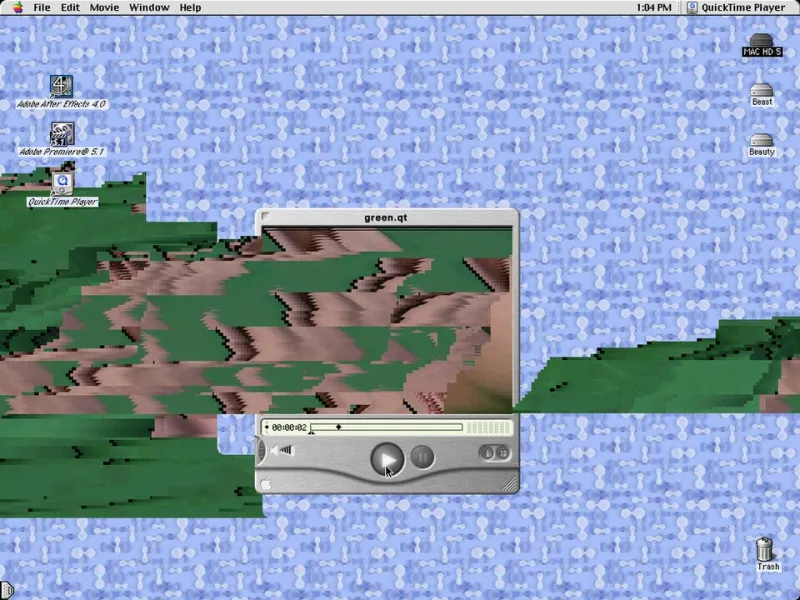
There's something else drawing people to this, something harder to explain cleanly. Degraded VHS footage has a look that's become genuinely beloved — the color bleeding, the tracking errors, the way the image stutters and warps at the edges. It's the visual equivalent of static. Signal trying to survive.
Glitch aesthetics in art and music have been chasing this quality for years, trying to manufacture something that VHS tapes produce naturally just by being old. When you watch footage that's been through the wringer — when the image tears and reassembles itself, when colors bleed into each other like watercolors — there's a strange beauty in it. It makes the mundane feel sacred somehow. A kid blowing out birthday candles, interrupted by a wave of white noise, becomes something closer to a transmission from another dimension.
That might sound dramatic. But spend an hour watching home video from 30 years ago and see if it doesn't do something to you.
Preservation as Signal
What these archivists are really doing, when you strip away the technical process and the ethical debates, is refusing to let signals die. Every tape they digitize is an argument that ordinary life is worth remembering. That the people who didn't make movies or write books or get famous still left something behind worth keeping.
The footage gets backed up to hard drives, uploaded to the Internet Archive, sometimes shared in small online communities where people can watch and comment and occasionally help identify the families involved. It becomes part of a growing unofficial archive of American life — the version that wasn't staged, wasn't edited for public consumption, wasn't meant to last.
Somewhere in a digitized file on a server in who-knows-where, a grandmother is still laughing at something just off-frame. The tape decayed. The signal survived.