Still Broadcasting: The Underground Radio Rebels Keeping Pirate Airwaves Alive
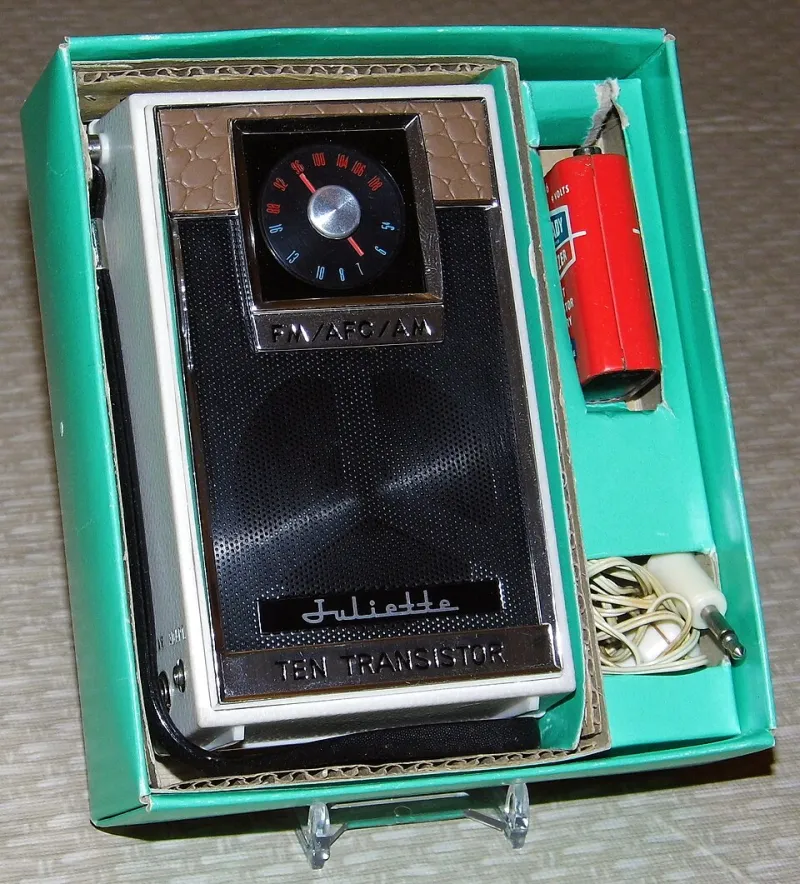
Photo: Joe Haupt from USA, CC BY-SA 2.0, via Wikimedia Commons
There's a frequency somewhere in your city that doesn't belong to anyone official. No call letters filed with the FCC. No corporate parent company. No algorithm deciding what gets played next. Just a transmitter, a signal, and someone who decided that the airwaves were too important to leave to the licensed.
Pirate radio has this reputation as a relic — something from the 80s and 90s, when kids in Brooklyn or Chicago would lug equipment up to rooftops and flood the dial with hip-hop that commercial stations wouldn't touch. That story is true. But the story didn't end there.
The Signal Didn't Die, It Just Got Stranger
In 2024, unauthorized FM broadcasters are still very much operating across the United States. They're in South Florida, where Caribbean diaspora communities have been running low-watt Spanish and Creole-language stations for decades. They're in rural Appalachian towns where local programming simply doesn't exist anymore after years of consolidation gutted regional radio. And they're in college towns, basements, and converted garages, where a new generation of broadcasters has discovered something that streaming never quite replicated: the feeling that someone nearby is actually talking to you.
The equipment has gotten cheaper and more accessible. A basic FM transmitter setup — the kind that can reach a few miles in an urban area — can be assembled for a few hundred dollars. YouTube tutorials walk you through the whole process. Online forums share antenna designs, frequency gap maps, and tips for staying under the radar. The knowledge barrier that once made pirate radio an insider's game has nearly vanished.
What's replaced it is something more interesting: a question of why.
Who's Actually Out There
Spend enough time in the right corners of the internet and you'll find them — the operators who talk about their setups in oblique terms, never giving too much away but clearly proud of what they've built. Some are hobbyists in the truest sense, broadcasting old jazz records into the night for an audience that may or may not exist. Others are running genuine community operations, filling gaps left behind by the slow death of local radio.
One type that keeps coming up is the "signal artist" — broadcasters who treat the FM band as a medium rather than just a delivery mechanism. They transmit ambient soundscapes, experimental music, or spoken-word pieces designed specifically for the experience of being received mid-commute, mid-static, mid-channel-scan. The accidental listener is part of the art. You weren't supposed to find it. That's exactly the point.
There's a philosophical throughline here that connects to something bigger than radio. In an era where every piece of media is targeted, tracked, and optimized for engagement, the idea of just sending something out without knowing who receives it feels almost radical. No analytics. No listener data. No feedback loop. Just transmission.
The FCC's Complicated Silence
Here's the thing that surprises most people when they learn about the current pirate radio landscape: the FCC has been relatively quiet about it. Enforcement actions still happen — the agency issued hundreds of notices and fines over the past several years, particularly targeting repeat offenders in major markets — but the overall posture has shifted. Budget constraints, staffing limitations, and competing priorities have left a lot of unauthorized operators broadcasting without meaningful interference.
That doesn't mean it's legal. It very much isn't. Unlicensed broadcasting on FM frequencies remains a federal violation, and the penalties can be severe for anyone who ends up on the wrong side of an enforcement action. But the practical reality is that a low-power station in a mid-sized city, broadcasting on a frequency gap, can often operate for months or years without attracting official attention.
Some advocates argue this enforcement gap actually points to a policy failure — that the demand for local, community-based broadcasting is real and unmet, and that the FCC's licensing structure makes legal low-power FM stations difficult and expensive to establish. The LPFM (Low Power FM) service exists as a legal alternative, but its application windows are limited and its rules are restrictive enough that many community operators find it easier to just... not bother.
Resistance in the Register
What makes the current pirate radio moment distinct from earlier waves isn't just the technology or the regulatory landscape. It's the cultural context. Broadcasting illegally in 2024 is a statement made in direct contrast to the world of algorithmic media — a world where Spotify knows what you want before you do, where your podcast feed is curated by engagement metrics, where nothing is ever really accidental.
The people still building transmitters and hauling them to rooftops aren't just nostalgic. They're making an argument about what media is for. Not for engagement. Not for monetization. For transmission. For the strange, one-directional intimacy of speaking into a frequency and trusting that someone, somewhere, is listening.
That's a weird thing to do in 2024. It's also, depending on how you look at it, kind of beautiful.
Somewhere on the dial right now, between the corporate classic rock and the syndicated talk shows, there's a gap. And in that gap, someone is broadcasting. You probably won't find them. But they're there.