Dead Formats, Alive on Purpose: How Gen Z Fell in Love with Tech Nobody Wanted Anymore

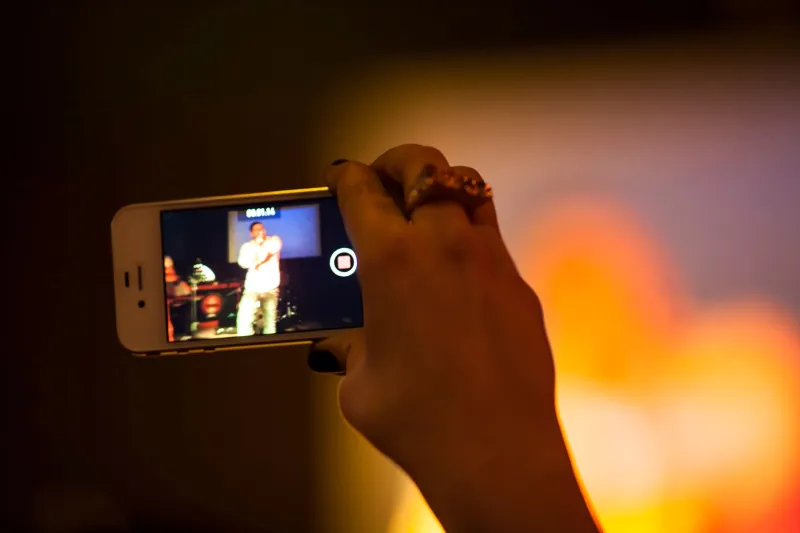
Photo by Photo by Phil Hearing on Unsplash on Unsplash
There's a specific kind of record store that exists in most mid-sized American cities — the kind where the bins smell like dust and old cardboard, where the fluorescent light flickers just enough to feel cinematic. A few years ago, the average customer there was probably a guy in his forties reliving something. These days, there's a decent chance they're twenty-two, wearing a thrifted jacket, and genuinely trying to figure out how a turntable needle works.
Something shifted. And it's not just vinyl.
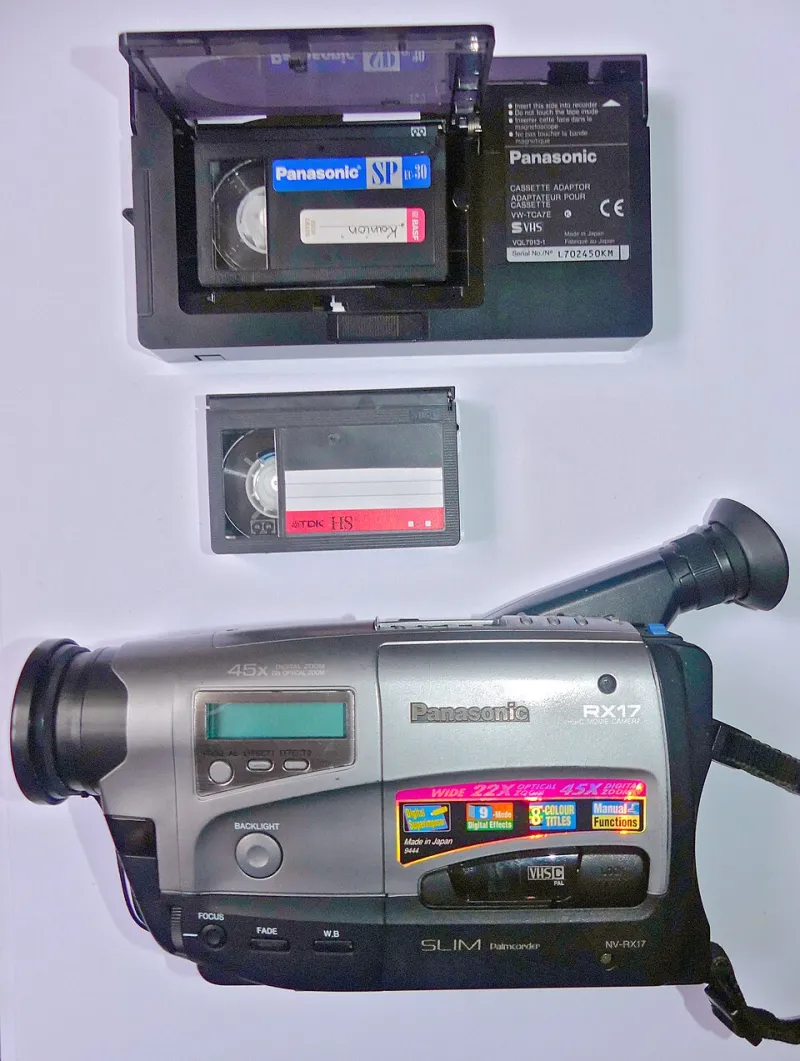
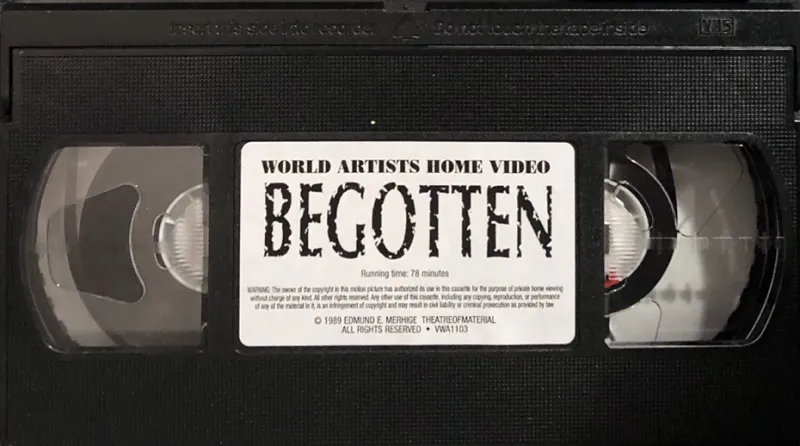
Across the country, a generation raised entirely inside the internet is quietly reaching for things that predate it. Film cameras with actual rolls of 35mm. VHS camcorders bought off Facebook Marketplace for thirty bucks. Mechanical typewriters clacking away in dorm rooms. These aren't museum pieces to the people using them — they're active creative tools, chosen deliberately over the sleeker, faster, smarter options sitting right next to them on the desk.
The question worth asking isn't just why. It's why now, and what exactly these formats are offering that a smartphone with seventeen camera modes can't.
The Algorithm Didn't Ask Permission
Spend ten minutes talking to any young creator who's made the analog switch, and you'll hear a version of the same thing pretty quickly: they got tired of being watched.
Not in a paranoid, tinfoil-hat way — more like a slow, creeping exhaustion. Every photo taken on an iPhone is tagged, timestamped, geolocated, and fed into a system that learns from it. Every Spotify stream is data. Every YouTube upload runs through content ID, recommendation engines, and ad optimization layers before it reaches another human being. The creative act and the surveillance apparatus have become essentially inseparable.
Marcus, a 23-year-old musician based in Philadelphia who records his bedroom pop songs directly to cassette four-track, put it bluntly: "When I record digitally, I'm always thinking about what the algorithm's going to do with it. With the four-track, the only thing listening is the tape. That's it. That's the whole audience until I decide otherwise."
There's a freedom in that obscurity that digital tools can't replicate, no matter how many privacy settings you toggle.
Limitations as a Creative Language
Here's the counterintuitive thing about obsolete formats: their weaknesses are the point.
Film cameras give you a fixed number of exposures. You can't immediately review what you shot. The grain is unpredictable. The colors shift depending on how old the roll is, how it was stored, whether it got a little too warm in your bag on a July afternoon. Every one of those variables is, from a technical standpoint, a flaw. From a creative standpoint, they're constraints that force decisions.
Jasmine, a 21-year-old photographer in Austin who shoots exclusively on expired film she sources from estate sales, describes the experience as "being in a conversation instead of just producing output." She points out that when you know you've got twelve frames on a roll, you stop and actually look at what's in front of you. "Digital made me lazy," she says. "I'd take two hundred photos and feel like I'd done something. Film made me realize I wasn't really seeing anything."
This is the analog paradox that keeps coming up: the format that can do less somehow demands more presence from the person using it. And for a generation that grew up with infinite digital options, that friction feels less like a bug and more like the whole feature.
Typewriters and the Refusal to Be Corrected
The mechanical typewriter revival is maybe the most telling piece of this whole thing, because typewriters are genuinely, aggressively inconvenient. There's no delete key. No autocorrect. No cloud backup. If you make a mistake, it's either correction fluid or you live with it.
And yet typewriter sales have been climbing steadily for years, driven largely by buyers under thirty. Royal and Olivetti machines that sat in thrift stores for a decade are now going for real money on eBay.
Derek, a 24-year-old writer in Brooklyn who drafts all his short fiction on a 1971 Olivetti Lettera, says the appeal is almost meditative. "My laptop is connected to everything. There are seventeen tabs open and three notifications and my email's sitting there. The typewriter is connected to nothing. It's just me and the page." He pauses. "Also, nobody's training an AI on my drafts without my permission. That matters to me."
That last part lands differently than it might have a few years ago. The anxiety around generative AI scraping creative work has made a lot of young artists genuinely reconsider where they put their ideas. A typewritten manuscript exists only where you put it. It doesn't live on a server somewhere, quietly becoming training data.
Not Your Parents' Nostalgia
It's worth being clear about what this isn't. This isn't a generation mourning something they lost — they never had it to begin with. Nobody who's twenty years old right now grew up watching VHS tapes or developing their own film. The attachment isn't sentimental in the traditional sense.
If anything, it's almost the opposite. These formats feel new to the people discovering them now. The crackle of vinyl, the color bleed on Super 8 footage, the tactile resistance of typewriter keys — these are genuinely novel sensory experiences for people who grew up on touchscreens and lossless audio compression.
What looks like nostalgia from the outside is actually closer to archaeology. Young creators are digging up tools that got buried, not because they want to go back to something, but because they're looking for something that the present moment doesn't seem to have.
What the Signal Sounds Like When It's Yours
There's a throughline here that connects back to something fundamental about creativity and control. The digital ecosystem is extraordinarily powerful, but it's also extraordinarily extractive. Every tool in it is owned by someone else, optimized for someone else's goals, monitored by someone else's systems.
Analog formats don't offer that trade-off. A cassette tape doesn't know who you are. A film camera doesn't upload anything. A typewriter has no terms of service.
For a generation that has never known a world without data harvesting, choosing a format that simply cannot participate in that system is a meaningful act. It's not Luddism — most of these same people have iPhones in their pockets and maintain active social media presences. It's more like carving out a specific space where the signal belongs entirely to them.
The static and the grain and the hiss and the mechanical clunk aren't flaws to be corrected. They're proof that something happened, in a physical place, without anyone watching.
That's rarer than it sounds. And apparently, it's worth a lot.