Caught on Camera, Saved by Accident: The TikTokers Who Became Unlikely Keepers of Vanishing Scenes
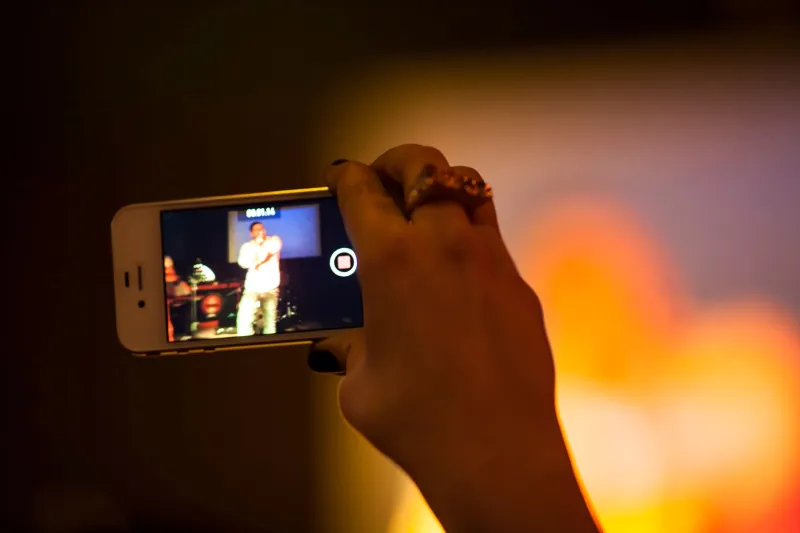
Nobody handed Deja Rollins a preservation grant. Nobody told her to document the New Orleans bounce scene's hyper-local block party circuit before half those venues shut down. She just liked going, liked filming, liked the way her phone could hold onto a moment that felt too alive to last. Then one video hit 400,000 views, and suddenly strangers from Portland and Pittsburgh were asking her where they could learn more.
"I didn't even think of it as documentation," she said in a DM exchange last spring. "I thought of it as showing people something they were missing."
That gap — between showing and saving — is where something genuinely interesting is happening on TikTok right now. Quietly, without institutional backing or archival training, a loose network of creators across the US has stumbled into the role of cultural first responders. They're capturing regional music scenes, underground fashion movements, dying craft traditions, and neighborhood rituals that no museum or documentary crew ever thought to chase. And they're doing it before those things are gone.
The Scene Nobody Else Was Filming
The pattern tends to go like this: a creator starts posting about something they love — a local lowrider club, a specific style of hand-painted sneakers that only exists in one city's swap meet circuit, a regional subgenre of gospel that never made it onto Spotify. The algorithm, hungry for novelty, occasionally surfaces it to an audience that had no idea the thing existed. Comments flood in. People want more.
What began as personal content becomes something closer to a living record.
Take the case of Marcus Treviño, a 23-year-old from San Antonio who started filming conjunto musicians playing at quinceañeras and backyard gatherings — not the polished festival sets, but the informal, sweaty, three-generations-in-one-room stuff. He wasn't trying to make a point about cultural erasure. He just thought it was beautiful and figured his followers might agree.
Now he has a playlist of over 200 videos spanning two years, featuring musicians in their seventies and eighties who'd never been recorded in any formal capacity. Several of them have since passed away. The videos remain.
"I didn't realize what I had until people started reaching out from universities," he said. "Ethnomusicology professors. I had to look that word up."
The Tension Between Going Viral and Getting It Right
Here's where things get complicated, because TikTok is not a neutral medium. The platform's mechanics reward certain kinds of storytelling — fast cuts, trending sounds, emotional peaks delivered in under sixty seconds. That framework doesn't always sit comfortably alongside the slower, more textured reality of actual subcultures.
Some creators have wrestled openly with this. A Detroit-based creator who documents the city's jit dance tradition — a style with deep roots in Black Detroit neighborhoods — has talked about the pressure she feels to make her videos "pop" in ways that sometimes flatten what she's actually trying to show.
"The algorithm wants the highlight reel," she explained in a video that itself went moderately viral. "But the culture is in the in-between parts. The warmups. The arguments about who did it first. The way it gets taught."
That tension — spectacle versus substance — is one the most thoughtful creators in this space are actively navigating. Some have started posting longer-form content on YouTube alongside their TikToks, essentially using the short-form platform as a trailer for the deeper archive. Others have begun tagging local historical societies and cultural organizations in their posts, trying to create bridges between viral reach and institutional memory.
When the Community Pushes Back
Not every subculture wants to be found. That's the other side of this story, and it's worth sitting with.
Several creators have described the experience of filming something niche and beloved, watching it explode in visibility, and then fielding frustration — or outright anger — from the communities they thought they were celebrating. A creator in the Pacific Northwest who documented a specific underground rave scene faced backlash when her videos drew crowds to events that had deliberately stayed small. The intimacy that made the scene worth documenting was partly destroyed by the documentation itself.
"There's a real question about who gets to decide what gets preserved," said one academic who studies digital folklore and asked not to be named because she's currently writing about exactly this topic. "These creators are making those decisions unilaterally, often with good intentions, and sometimes without fully understanding the community's own relationship to visibility."
The best creators seem to know this. They ask permission. They blur faces when requested. They let community members speak for themselves rather than narrating over them. They treat the camera as a guest, not a right.
Something the Algorithm Didn't Plan For
What's strange and kind of wonderful about all of this is that none of it was designed. TikTok didn't set out to build a distributed archive of American subculture. The creators didn't sign up for that job. The communities certainly didn't apply to be documented.
And yet here we are, with a scattered, imperfect, occasionally brilliant record of things that might otherwise have vanished without a trace. A style of stepping that only exists in a particular Chicago neighborhood. A regional slang lexicon from Appalachian teenagers. The last practitioners of a type of furniture painting that was popular in rural Louisiana in the 1980s and basically nowhere else.
These aren't signals anyone was broadcasting intentionally. They're the kind of transmission that happens when someone just points their phone at something real and hits record.
Deja Rollins is still posting. Marcus Treviño just got a message from a music library in Austin asking if they could host copies of his videos. The Detroit creator is working on a longer documentary, shot properly this time, with a mic she bought from a pawn shop.
None of them set out to be archivists. But the archive is growing anyway — one accidental video at a time, one strange signal becoming a story before it disappears entirely.