Reading Ruin: The Gen Z Diviners Who See Tomorrow in Yesterday's Decay

There's a water stain on the ceiling of a shuttered laundromat in Akron, Ohio that a 23-year-old named Petra has visited four times in the past year. She photographs it from the same angle each trip, tracking how the brown halo expands, contracts, and warps depending on the season. She keeps the images in a dedicated folder labeled, simply, the oracle.
"It's not random," she says, scrolling through the progression on her phone. "The shape is responding to something. Pressure, time, the building breathing. That's information. You just have to learn how to read it."
Petra isn't alone in this. Quietly, in thrift-store Discord servers and niche subreddits and lo-fi Instagram accounts with a few hundred loyal followers, a subculture has been assembling itself around a genuinely strange premise: that decay — rust, dust, water damage, oxidation, the slow collapse of physical matter — carries meaning. Interpretable, almost communicative meaning. And that if you pay close enough attention, it might tell you something about what's coming.
The Language Nobody Taught
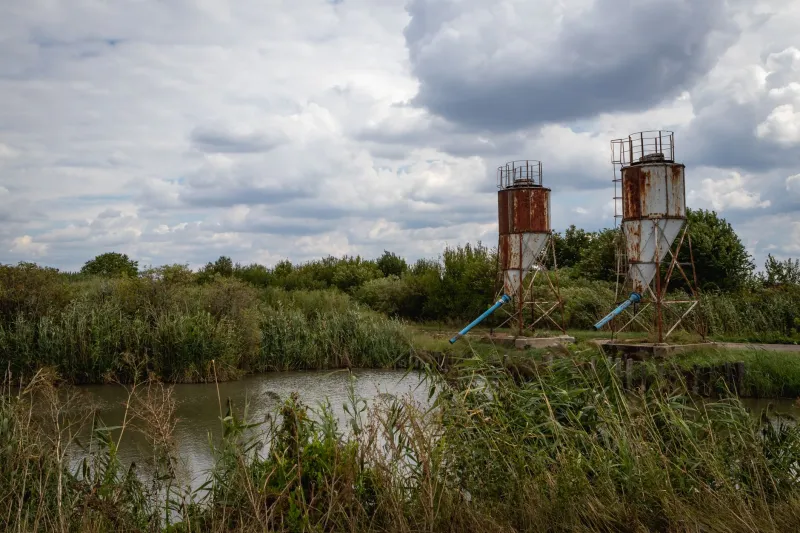
The practitioners don't have a unified name for what they do. Some call it drift reading. Others say ruin divination or just pattern work. A few borrow loosely from chaos theory, talking about strange attractors and emergent signals. But the core practice is consistent: find a surface that time has worked on — a rust-streaked boiler in an abandoned factory, a basement wall mapped with mineral deposits, a forgotten shelf thick with undisturbed dust — and sit with it long enough to let structure emerge.
This isn't pareidolia exactly, though that's the lazy comparison most outsiders reach for. Pareidolia is passive — your brain seeing a face in a cloud without you asking it to. What these practitioners describe is more deliberate. More like learning a dialect.
"I spent three months just studying one patch of rust on a fire escape in Pittsburgh," says Marcus, 26, who documents his practice on a sparse blog that reads like field notes from an expedition. "Not because I thought it was magic. Because I wanted to understand the logic of how it spread. And once you understand the logic, the pattern stops being noise. It starts being a sentence."
What that sentence says is the part that gets genuinely philosophical.
Signals in the Settling
For some practitioners, the interpretive layer is personal — they're reading their own psychology back through the patterns, using decay the way someone else might use a Rorschach test or a dream journal. The rust bloom becomes a mirror. The water stain becomes a map of where you've been leaking.
For others, the practice is more externally oriented. They're trying to read the building, the neighborhood, the city. A factory wall oxidizing in a particular direction tells you something about airflow, about history, about what was produced there and what it cost. Dust accumulation on a forgotten surface is a record of how long a room has been ignored — and by extension, who got ignored with it.
"Decay is documentation," says Yolanda, a 24-year-old in Detroit who photographs abandoned homes and annotates the images with her interpretations, posting them under the handle @whatthebuildingheld. "These patterns are evidence. Of time, of neglect, of what happened here. Reading them isn't mystical. It's archival."
But then there's the third category, and this is where it gets genuinely weird: the ones who think the patterns are actually predictive.
The Prophetic Argument
This is the fringe of the fringe, and the practitioners themselves are quick to acknowledge that. But the argument, laid out carefully, is more coherent than it sounds.
The logic goes something like this: physical systems deteriorate according to forces — humidity, temperature, chemical composition, structural stress. These forces are not random. They're responsive to conditions. And conditions, in a built environment, are shaped by human decisions — economic, political, social. So a rust pattern isn't just a rust pattern. It's the physical residue of a hundred choices made by people in positions of power, playing out in iron and water and time.
If you can read the pattern, you can understand the forces. If you understand the forces, you can — in theory — anticipate where they lead.
"I'm not saying I'm psychic," Marcus is careful to clarify. "I'm saying that the same economic pressures that caused this building to be abandoned are still operating. The pattern on the wall is a symptom. And symptoms tend to recur."
It's a kind of materialist prophecy. Less mysticism, more forensics.
Why Now, Why Them
It's worth asking why this particular practice is finding traction with this particular generation. The easy answer — and probably not the wrong one — is that Gen Z came of age in a moment when official channels of meaning-making stopped feeling trustworthy. Institutions, algorithms, news cycles, market signals: all of it has started to feel like noise dressed up as signal.
So some people went looking for signals somewhere else. Somewhere slower. Somewhere that couldn't be gamed or optimized or A/B tested into irrelevance.
Decay is patient. It doesn't have engagement metrics. A water stain doesn't know you're watching it.
There's also something quietly political in the choice of subject matter. Abandoned factories. Neglected buildings. Structures that got left behind when capital moved on. Reading meaning into those surfaces is, on some level, an act of witness. Of insisting that what happened here matters. That the evidence doesn't just sit there — it speaks.
The Practice, Up Close
If you want to try it, the practitioners have loose guidelines. First: slow down. Most people move through decayed spaces too fast, cataloging ruin rather than reading it. Second: return. A single visit gives you a snapshot; multiple visits give you a story. Third: resist the urge to immediately interpret. Sit with the pattern before you decide what it means.
Petra photographs her laundromat ceiling stain with a cheap digital camera she bought at a Goodwill in Columbus. She says the slight inconsistency of the lens, the way it renders color a little warm and soft, actually helps. "Perfect documentation would be clinical. This feels more like conversation."
She's planning her fifth visit for sometime this fall, when the humidity drops and the stain's outer edge tends to sharpen. She has a theory about what that sharpening will show her. She's not ready to share it yet.
"Some signals," she says, "you have to wait for the right moment to transmit."
The ceiling, presumably, agrees.