Voices in the Concrete: The Gen Z Obsessives Decoding Transit Announcements as Accidental Poetry
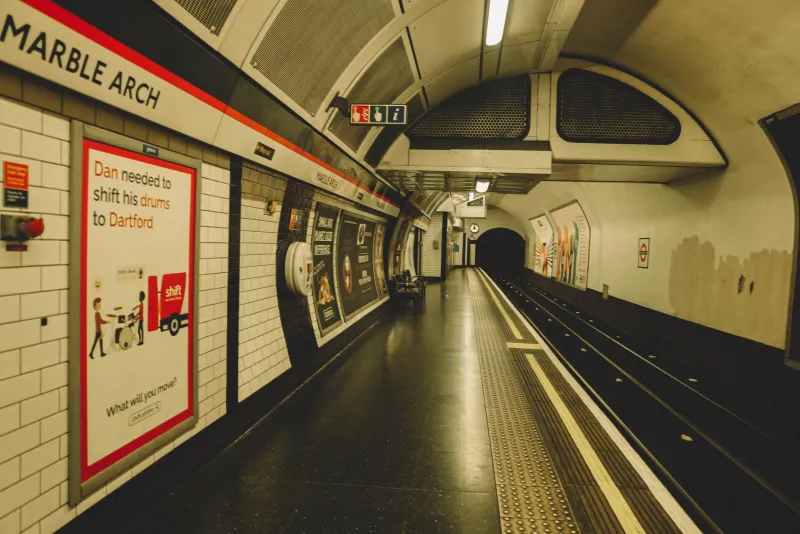
There's a particular kind of voice that raised American cities. It came through ceiling speakers caked in dust, through intercoms bolted to tiled walls, through the warped audio of a cassette deck running slightly too slow. It said things like "Please stand clear of the closing doors" and "This is a reminder that unattended packages will be removed by authorities." It was never meant to be remembered. And yet, for a growing cluster of young collectors and amateur archivists scattered across the US, these forgotten announcements have become something close to scripture.
Call them transit decoders, PA archaeologists, or just people with a very specific obsession. Whatever the label, they're spending real time and real money hunting down recordings of old subway PSAs, bus terminal broadcasts, and airport intercom loops — not out of nostalgia for a time they barely lived through, but because they believe something genuine got trapped inside all that corporate monotone.
The Archive Beneath the Archive
The community doesn't have one central home, but it clusters in Discord servers, obscure subreddits, and Tumblr pages that feel like they've been running since the mid-2010s even when they haven't. The shared currency is recordings: rips from VHS tapes of old MTA safety films, bootleg audio captured by transit workers on handheld recorders, YouTube uploads of long-defunct regional bus system announcements from cities like Cleveland, Albuquerque, and Buffalo.
What makes a recording valuable in this world isn't audio quality — it's the opposite. Degraded recordings are prized. The more compression artifacts, the more magnetic tape hiss, the more a voice sounds like it's calling from the bottom of a well, the more interest it generates. The degradation, collectors say, is part of the message.
"When a recording gets old enough, it stops being information and starts being texture," says one 22-year-old collector from Philadelphia who goes by the handle @intercomghost online. "The words are still there but they've been through something. You can hear that."
Bureaucratic Language as Accidental Literature
The decoding practice — and yes, people do literally decode these things — operates on a few different levels. On the surface, it's straightforward archival enthusiasm, the same impulse that drives anyone to save something before it disappears. But dig a little deeper and you find a genuine critical project happening.
Members of these communities will transcribe old announcements and run them through what they call "pressure readings" — basically close literary analysis applied to the most utilitarian language imaginable. A 1987 Port Authority announcement warning travelers about pickpockets becomes a meditation on urban paranoia and the criminalization of poverty. A looping O'Hare Airport message from the early nineties about keeping your baggage in sight at all times reads, in this context, like a poem about anxiety and ownership. A New York City Transit script instructing passengers to report suspicious behavior gets dissected for its implicit assumptions about who counts as suspicious.
None of this was intended by the people who wrote these scripts. That's the whole point.
"These weren't written to be meaningful," explains one 25-year-old from Chicago who has amassed over 400 recordings. "They were written to be functional. But function is a kind of honesty. You can't dress it up the way you dress up advertising. It just says what it needs to say, and in doing that it accidentally tells you everything about what the city thought of you."
Why Now, Why This Generation
It would be easy to write this off as another Gen Z contrarian aesthetic — finding beauty in the ugly, meaning in the mundane, the same impulse that made vaporwave popular or drove people to collect instructional videos from the eighties. And sure, there's some of that energy here. But the collectors themselves push back on that reading.
For a generation that grew up with algorithmically curated everything — playlists engineered for their mood, feeds adjusted to their engagement patterns, ads that seem to know what they were thinking before they thought it — there's something almost radical about a voice that genuinely doesn't care about you. Old transit announcements weren't personalized. They weren't optimized. They were broadcast at everyone and no one simultaneously, which means they were, in a strange way, completely honest.
"Spotify knows what I want to hear," says @intercomghost. "The MTA from 1991 did not. And there's something really freeing about that. It's just talking into the room. It's not performing for me."
That quality — the absence of performance — is increasingly rare in the media landscape these collectors grew up navigating. Every piece of content is designed to hold attention, to trigger a response, to convert feeling into engagement. An old transit announcement just... exists. It was made to do a job and then it stopped doing the job and now it just sits there being itself. For some young Americans, that's almost moving.
Signal From the Infrastructure
There's a strand of this community that goes further into what might genuinely be called mysticism. These are the members who believe that transit systems — as the circulatory infrastructure of cities — absorbed something of the emotional life of the people who moved through them. That a recording made in a busy station during a transit strike, or in an airport terminal on September 12th, 2001, carries a kind of charge that has nothing to do with the words being spoken.
It's a fringe position even within the community, but it points toward something the whole subculture shares: a belief that attention paid to overlooked things reveals overlooked truths. That the signal is always there if you're willing to tune in.
"Cities talk," says the Chicago collector. "Not in a mystical way — well, maybe a little in a mystical way — but mostly just in the sense that every decision a city makes about how to speak to its residents is a decision about what those residents are worth. These recordings are evidence. They're the city telling on itself."
What Gets Preserved, What Gets Lost
There's a practical urgency underneath all the interpretation. Many of these recordings exist on deteriorating physical media — cassette tapes, VHS, reel-to-reel in storage rooms that nobody has opened in twenty years. Transit authorities don't typically archive their own PSA scripts, let alone their audio. When the hardware dies, the recordings die with it.
Some members of these communities have started reaching out directly to transit authorities, to retired workers, to the families of people who spent careers in the booth. They're trying to digitize what's left before it's gone. It's unglamorous work that will probably never trend anywhere.
But that's kind of the whole point, isn't it? The signal that nobody else is listening for is always the one worth chasing.
Somewhere right now, in a transit control room that smells like old coffee and fluorescent light, there's a voice on a tape that said something true about a city, about its people, about what it meant to be a body moving through public space in America at a specific moment in time. These kids are the ones who want to hear it.