Steel Prophets: The Young Americans Making Pilgrimages to Radio Towers Nobody Uses Anymore
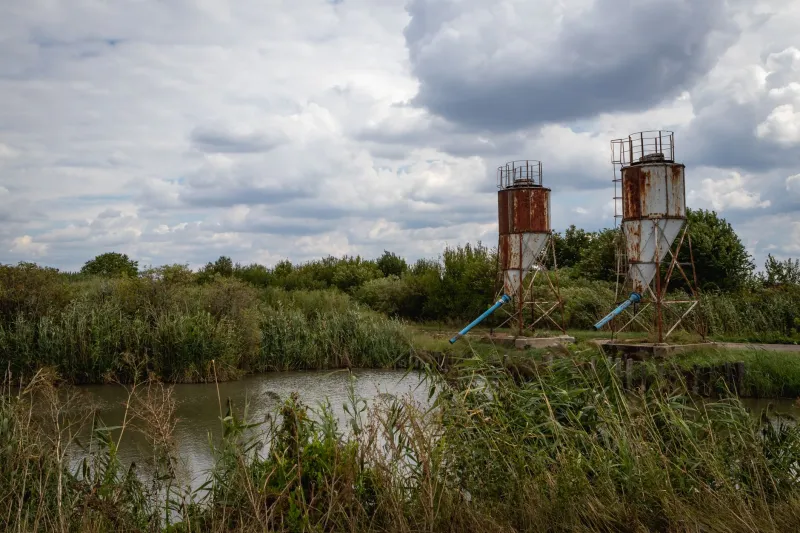
Somewhere outside Tulsa, Oklahoma, a 22-year-old named Marcus is standing at the base of a 600-foot guyed tower, neck craned back, squinting into pale afternoon sky. The structure hasn't transmitted anything in almost a decade. Its red warning lights stopped blinking years ago. The FCC license lapsed quietly, the way most things end — not with a bang, but with paperwork. Marcus has driven four hours to be here. He brought a field recorder, a camera, and a printed sheet of coordinates he compiled himself from old FCC databases and decommissioning notices. He is, by any reasonable definition, a pilgrim.
He is also not alone.
The Signal That Left a Shape Behind
Over the past few years, a loose but surprisingly organized community has formed around the documentation of abandoned radio towers across the United States. They call themselves different things — tower hunters, frequency followers, broadcast archaeologists — but the practice is essentially the same: locate a decommissioned transmission site, travel to it, and record what's left. The physical structure. The crumbling equipment sheds. The guy wires humming in the wind. The absence.
What drives this isn't hard to understand once you spend five minutes on any of the Discord servers or subreddits where these people gather. There's a genuine, almost devotional fascination with what these towers were — the invisible arteries of a communication network that once stitched together entire regions of the country. A 50,000-watt AM station could reach listeners hundreds of miles away on a clear night. These weren't just antennas. They were the closest thing a lot of rural communities had to a shared nervous system.
Now most of them just rust.
Building the Map Nobody Made
One of the more remarkable outputs of this community is the DIY databases they've assembled. Because there's no single government resource that tracks decommissioned towers in a user-friendly way, members have spent years cross-referencing FCC records, old engineering documents, newspaper archives, and satellite imagery to build their own. Some of these databases run into the thousands of entries, tagged with GPS coordinates, tower heights, original call signs, years of operation, and current physical status.
It's genuinely impressive work — the kind of archival labor that most institutions don't bother with because there's no obvious commercial value in it. But for the people doing it, the value is harder to quantify. "I think about all the voices that went through these structures," one contributor to a popular tower-mapping project wrote in a forum post that got screenshotted and shared widely. "Weather reports. Baseball games. Emergency alerts. Political speeches. Music nobody remembers anymore. It all traveled through these exact points in space. That means something."
That sentiment — that physical infrastructure carries some residue of the signals it once transmitted — comes up constantly in this community. It's not quite mystical, but it's not entirely rational either. It sits somewhere in the middle, which is exactly where the most interesting cultural territory tends to be.
The Aesthetic of Decay
The photography that comes out of these visits has developed its own recognizable visual language. Long exposures at dusk that turn guy wires into geometric webs against gradient skies. Close-up shots of corroded ground anchors half-swallowed by grass. Wide angles that emphasize the tower's scale against flat midwestern horizons. There's beauty in it — the kind of beauty that requires you to look at something broken and decide it's worth looking at.
Some of the more ambitious documentarians have started incorporating field recordings into their projects. Wind through the steel lattice produces sounds that sit somewhere between music and interference. Equipment sheds with their doors left open catch resonances that shift with temperature and humidity. A few people have released these recordings as ambient albums, uploaded to Bandcamp with liner notes that read like field reports — coordinates, weather conditions, structural observations.
One such release, a 40-minute piece recorded at a former clear-channel AM tower site in rural Mississippi, has accumulated a surprisingly devoted following. The creator, who goes by a handle referencing a long-dead shortwave frequency, describes the project as "trying to make audible what the tower was always doing, just without the content." Which is a genuinely interesting idea: signal stripped of message, transmission without information. Pure medium.
Nostalgia for a World They Didn't Live In
The obvious question is why this particular generation is drawn to this particular obsession. Most of these tower hunters were born after the AM radio landscape had already begun its long decline. They didn't grow up listening to the stations these towers once carried. They have no personal memories attached to the broadcasts.
But that might actually be the point. There's a specific texture to nostalgia for an era you never experienced — it's cleaner, less complicated by the actual messiness of having been there. You can love the idea of a thing without having to reconcile it with reality. And radio towers, especially dead ones, are perfect vessels for that kind of projection. They're monumental enough to feel significant. They're abstract enough to hold almost any meaning you want to load into them.
There's also something worth noting about the timing. This community has grown up entirely online, in a media environment defined by algorithmic feeds and personalized content — a world where the concept of a shared broadcast, something transmitted to everyone in range simultaneously regardless of who they are, feels almost alien. The old radio model, for all its limitations, had a certain democratic bluntness to it. The signal went out. You were either in range or you weren't. No targeting, no optimization, no engagement metrics. Just a tower and a radius.
Monuments to the Invisible
What this community is ultimately building, across all its databases and photographs and field recordings and forum threads, is a monument to infrastructure — specifically to the kind of infrastructure that does its work invisibly and gets forgotten the moment it stops working. Nobody builds museums to transmission towers. Nobody erects historical markers at decommissioned AM sites. The official record, when it exists at all, is a stack of FCC filings in a government database that requires knowing exactly what you're looking for to navigate.
So these people are doing it themselves. Driving to coordinates in the middle of nowhere. Standing at the base of structures that once mattered enormously and now matter to almost no one. Recording the sound of wind through steel. Making the invisible legible.
Marcus, back in Oklahoma, eventually packs up his gear and heads back to his car. He'll post the photos tonight, add the tower's coordinates to the shared database, upload a short clip of the field recording to the community server. A few hundred people will see it. Some of them will recognize the tower from old broadcast logs. Someone will share a clip of a program that once aired on the station it served.
For a few hours, the signal comes back. Sort of.