Glorious Garbage: The Young Creators Who Decided Bad Was Better

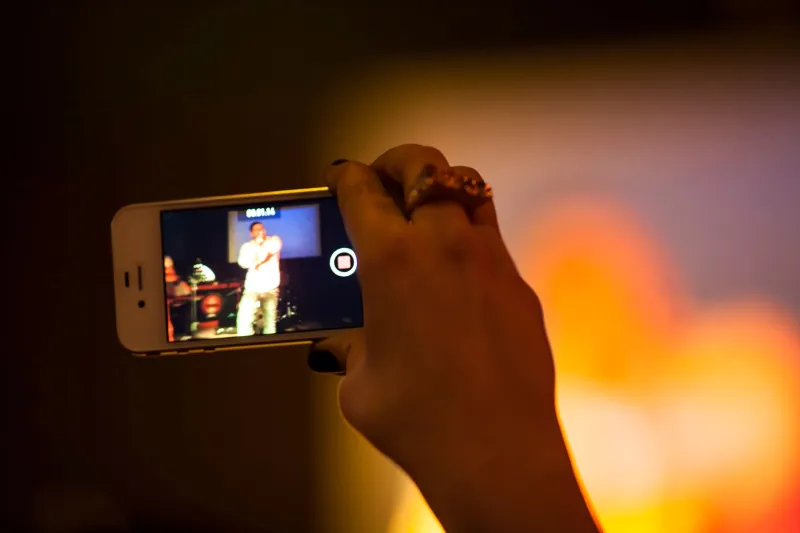
Photo by Photo by Oleksii Nemnozhko on Unsplash on Unsplash
There's a moment in a lot of young artists' lives right now where they finish a project, look at it, and think: this sounds too good. Not good as in moving or resonant — good as in smooth, clean, optimized. Good in the way a product is good. And then they go back in and mess it up on purpose.
This is not a niche thing anymore.
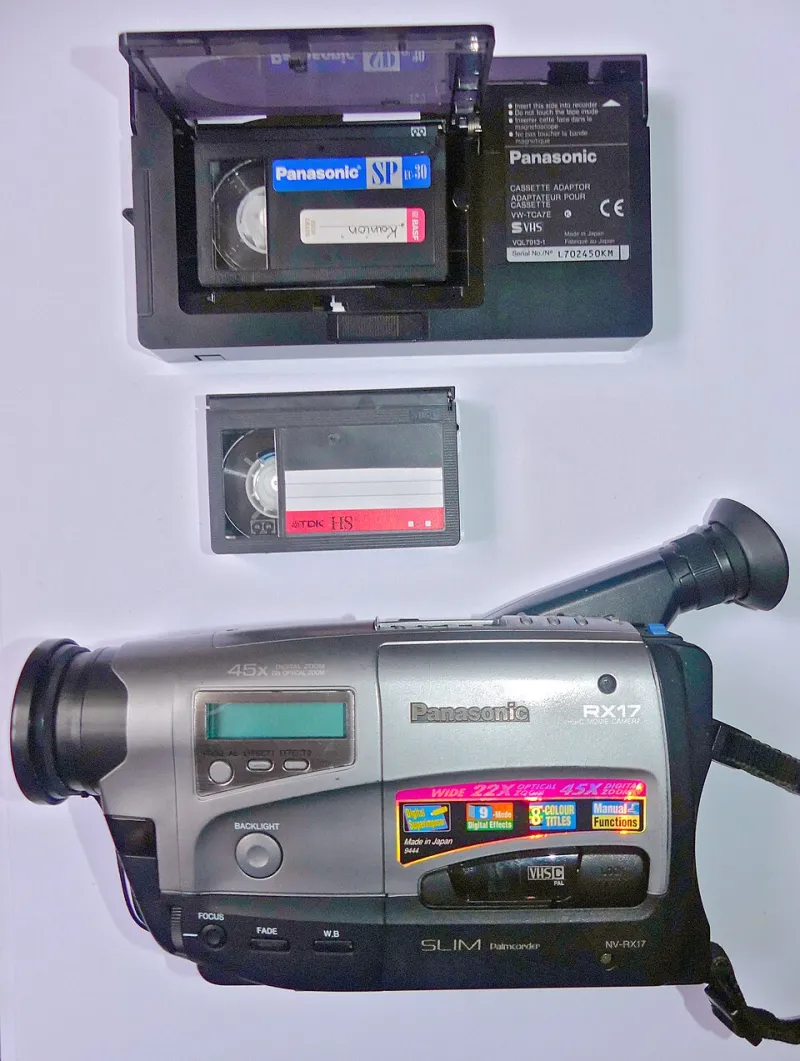
Across music, visual art, film, and photography, a genuinely strange creative shift is happening: the deliberate pursuit of imperfection as a philosophical stance. Blown-out microphones. VHS smear. Out-of-focus frames kept in the final cut. Four-track recordings where you can hear someone breathing wrong. The aesthetic has a dozen names depending on who you ask — lo-fi, raw, DIY maximalism, anti-production — but the impulse underneath all of them is the same. These creators are refusing to be polished, and they want you to know it.
The Algorithm Made Them Do It (By Making Everything the Same)
If you want to understand why 'bad' became beautiful, you have to understand what 'good' started to mean online. Over the past decade, the platforms that most people use to discover creative work — YouTube, Spotify, Instagram, TikTok — developed increasingly sophisticated systems for surfacing content that performs well. And the content that performs well tends to share certain qualities: high production value, quick pacing, satisfying resolution, visual clarity.
The result isn't necessarily that everything looks the same. It's that everything sounds the same in a deeper sense. There's a kind of structural sameness, a shared grammar of optimization, that runs beneath wildly different genres and styles. A folk singer and a horror filmmaker and a graphic designer can all be working in completely different aesthetics and still be making work that's been shaped, consciously or not, by the same invisible pressure to be consumable.
For a lot of young creators, that pressure started to feel suffocating. Not because they couldn't meet the standard, but because meeting it felt like disappearing into it.
Marcus, a 24-year-old musician based in Philadelphia who records under the name Duct Tape Séance, describes the turning point pretty simply: "I made a song that sounded exactly like what I was supposed to sound like, and I hated it. Not the song — the feeling of it. Like I'd filled out a form correctly."
He started recording his next project on a busted cassette four-track he found at a Goodwill for eight dollars. The hiss is audible on every track. He left in a false start on the second song. The vocals sometimes clip. He put it out on Bandcamp and described it in the liner notes as "probably too quiet in some places and definitely too loud in others."
It got more attention than anything he'd made before.
Imperfection as Proof of Life
There's a word that keeps coming up when you talk to artists in this space: human. As in, the imperfections are proof that a human being made this. That someone's hands were involved, someone's nervous system, someone's specific afternoon in a specific room.
That might sound like a small thing. It isn't, in a moment when AI-generated images, music, and video are becoming genuinely difficult to distinguish from human-made work — at least at a surface level. The artifacts of imperfection have become a kind of authentication. Grain, noise, drift, blur: these are the fingerprints that algorithms currently struggle to fake convincingly, which means they've become, paradoxically, the markers of the real.
Jordan, a visual artist in her late twenties working out of Chicago, shoots exclusively on expired film she buys in bulk from estate sales. The colors are wrong. The exposure is unpredictable. Entire rolls sometimes come back from the lab looking like they were developed in someone's sink, because they essentially were.
"People ask me why I don't just apply a filter in Lightroom," she says. "And the answer is that I don't want to simulate the accident. I want the actual accident. The filter knows what it's doing. The expired film doesn't."
That distinction — between simulated imperfection and genuine imperfection — matters enormously to the people making this work. A lo-fi filter is a performance of rawness. A blown-out mic on a bedroom recording is the rawness itself. The audience, they argue, can feel the difference, even if they can't always articulate it.
The Philosophy Underneath the Fuzz
What makes this more than just an aesthetic trend is the degree to which the artists involved can articulate why they're doing it. This isn't accidental sloppiness or a lack of resources (though both of those things can produce similar results). It's a considered rejection of a specific value system.
The value system being rejected is the one that says creative work should be optimized. That the goal of making something is to make it as receivable as possible, as frictionless as possible, as likely to be consumed and shared and algorithmically rewarded as possible. That the measure of a piece of art is its performance metrics.
Against that, the imperfectionists are arguing something older and weirder: that art is supposed to cost you something. That the friction is the point. That a song that's hard to listen to in certain ways might be doing something that an easy song can't.
Devin, a filmmaker in his early thirties who shoots short films on a camera he describes as "technically broken," puts it like this: "When something's too clean, I don't trust it. I don't mean I think it's fake — I mean I don't feel anything pulling at me. It just goes in and out. The rough stuff catches."
When Bad Becomes Its Own Brand Problem
There's an obvious irony lurking here, and the artists in this space are mostly aware of it. Lo-fi has been a Spotify playlist category for years. Aesthetic imperfection has its own highly polished Instagram subcultures. The rough look can be — and often is — just another style to optimize for, another way of performing authenticity rather than having it.
The response from the artists who care about this distinction tends to be a shrug and a doubling down. If the aesthetic gets co-opted, go further. Get weirder. Make something that's genuinely difficult to market, because the difficulty is part of what makes it yours.
Marcus, the Philadelphia musician, says he's already noticed his particular corner of the lo-fi space getting crowded with people doing a version of it. His solution is to keep moving. "The point was never the cassette. The point was what the cassette forced me to do — make decisions fast, commit to them, leave the mistakes in. You can do that on any equipment. It's a way of working, not a sound."
Maybe that's the actual signal underneath all the noise: not a specific aesthetic, but a specific insistence. That the work should feel like it came from somewhere real, made by someone who was genuinely present, imperfectly, in the making of it.
In a content ecosystem designed to sand down every rough edge, that insistence is its own kind of rebellion. Quiet, grainy, slightly out of focus — and harder to ignore than it has any right to be.